A water heater making noise may have sediment, loose parts, high pressure, a bad valve, or a heating problem. Popping and crackling often come from mineral buildup in tank units. Hissing may mean escaping water or gas. The sound, location, and timing show whether safe checks are enough or a plumber should inspect the unit.
Table of Contents
- Why is my water heater making noise?
- What does a popping or crackling water heater sound mean?
- Why is my water heater banging or hammering?
- What causes a hissing noise from a water heater?
- Why is my water heater whining, screeching, or humming?
- Can a noisy water heater be dangerous?
- How can you troubleshoot a noisy water heater safely?
- Does water heater noise mean the unit needs repair or replacement?
- How do tank and tankless water heater noises compare?
- How can a plumber diagnose and fix a noisy water heater?
- Key takeaways
- Frequently Asked Questions
- Conclusion
Why is my water heater making noise?
A water heater may make noise when water, heat, pressure, or moving parts are not working as they should. Some sounds happen during normal heating. Other sounds point to sediment, a loose part, a leaking valve, or another safety issue. A short sound during a heating cycle is less urgent than a steady sound with leaking water.
The type of sound gives the first clue. Popping often comes from water trapped under sediment in a storage tank. Banging may come from water hammer, loose pipes, or heavy tank buildup. Hissing may come from a leak, a blocked valve, or gas near a burner. Whining and humming may involve electrical parts or water flow.
Timing also matters. A sound that happens only when the burner or element runs may involve heating. A sound that continues after heating stops may point to pressure, a valve, or a leak. The place where the sound starts matters too. Noise from the tank, pipes, controls, or burner can point to different faults.
Do not remove covers, open gas controls, or work on live wiring. Safe checks can help you collect useful details. A water heater repair professional can test the system and explain the next safe step. Westlake Village Plumber helps property owners find the cause without guessing.
What does a popping or crackling water heater sound mean?
Popping or crackling often means sediment has gathered inside a storage tank. Sediment is a layer of minerals and dirt that settles at the tank bottom. When the burner heats the water, bubbles form under this layer. The bubbles make popping, snapping, or crackling sounds.
This issue is common in places with hard water. The sound may start quietly and grow louder. The tank may still make hot water, so the problem is easy to miss. Heavy sediment can make the heater work harder and may shorten its useful life.
A trained plumber may flush the tank when the unit and drain valve can handle that work. Flushing means draining water through the tank to remove loose sediment. It may not remove hard deposits that have formed over time. An old drain valve may also start leaking after it opens, so flushing is not always a safe first step.
You can listen for when the sound begins and look for water near the base. Do not remove a burner cover or work near a gas flame. If the sound comes with slow heating, rusty water, leaks, or repeated shutdowns, professional water heater repair is safer. The final cost depends on parts, access, damage, urgency, and the needed work. A written quote should confirm the final cost before work begins.
Why is my water heater banging or hammering?
Banging may come from sediment inside a tank or from water hammer in the plumbing. Water hammer is a sharp shock that happens when moving water stops fast. It can make pipes hit framing, walls, or nearby supports. Tank rumbling is different because heated water often moves through sediment.
The sound’s location offers a useful clue. A deep rumble from the tank during heating may mean mineral buildup. A sharp bang when a faucet, valve, or appliance closes may mean water hammer. A repeated knock near a pipe may mean the pipe needs more support. Loose heating parts can also make noise as they expand and shrink.
High water pressure can make pipe noise worse. Pressure is the force that pushes water through the plumbing. Too much pressure can wear valves and fixtures faster. A plumber can test pressure and inspect the heater’s connections, expansion tank, shutoff valve, and nearby pipes.
You can note which faucet or appliance was running when the sound began. You may watch whether a pipe moves when a fixture closes, but do not force fittings or valves. A water heater repair professional can tell tank noise apart from whole-house plumbing noise. This may prevent an unnecessary water heater replacement when the real problem is a valve, pipe support, or pressure issue.
What causes a hissing noise from a water heater?
A hissing sound may come from water escaping through a small opening or from restricted water flow. It may also come from a temperature and pressure relief valve, a loose connection, or a tank leak. The sound’s location matters. A hiss near the burner or gas control needs quick attention.
A temperature and pressure relief valve is a safety valve. It opens when heat or pressure becomes unsafe. It may release water through a discharge pipe. Never cap, block, or remove this pipe. A valve that keeps releasing water needs inspection because pressure, overheating, or a bad valve may be the cause.
Gas water heaters need extra care. If you smell rotten eggs, hear gas near the unit, or suspect a gas leak, leave the building. Contact the gas utility or emergency services from a safe place. Do not use a switch, flame, phone, or appliance inside the suspected area. Qualified professionals should handle the heater.
A hissing sound from an electric heater may come from a leaking fitting or a heating element problem. Water near electrical parts creates a shock risk. Do not touch wet equipment. Emergency Plumbing may be needed when a leak is active, spreading, or damaging walls and floors.
Why is my water heater whining, screeching, or humming?
Whining, screeching, or humming may come from a heating element, valve, pump, or narrow water path. Electric water heaters can make noise when an element has mineral buildup. A partly closed valve can also make a high sound as water moves through a small opening.
A low hum may come from normal electrical work, vibration, or a nearby pump. The sound is more concerning when it is new, loud, or linked with weak hot water. Screeching can point to restricted flow or a failing part. A qualified plumber can check the element, thermostat, wiring, valves, and tank.
Do not remove an electrical access panel. Turning off a breaker does not prove that every part is safe to touch. Water and electricity can cause serious injury. The safest home check is visual. Look for leaks, moisture, scorching, damaged insulation, or a tripped breaker without opening the unit.
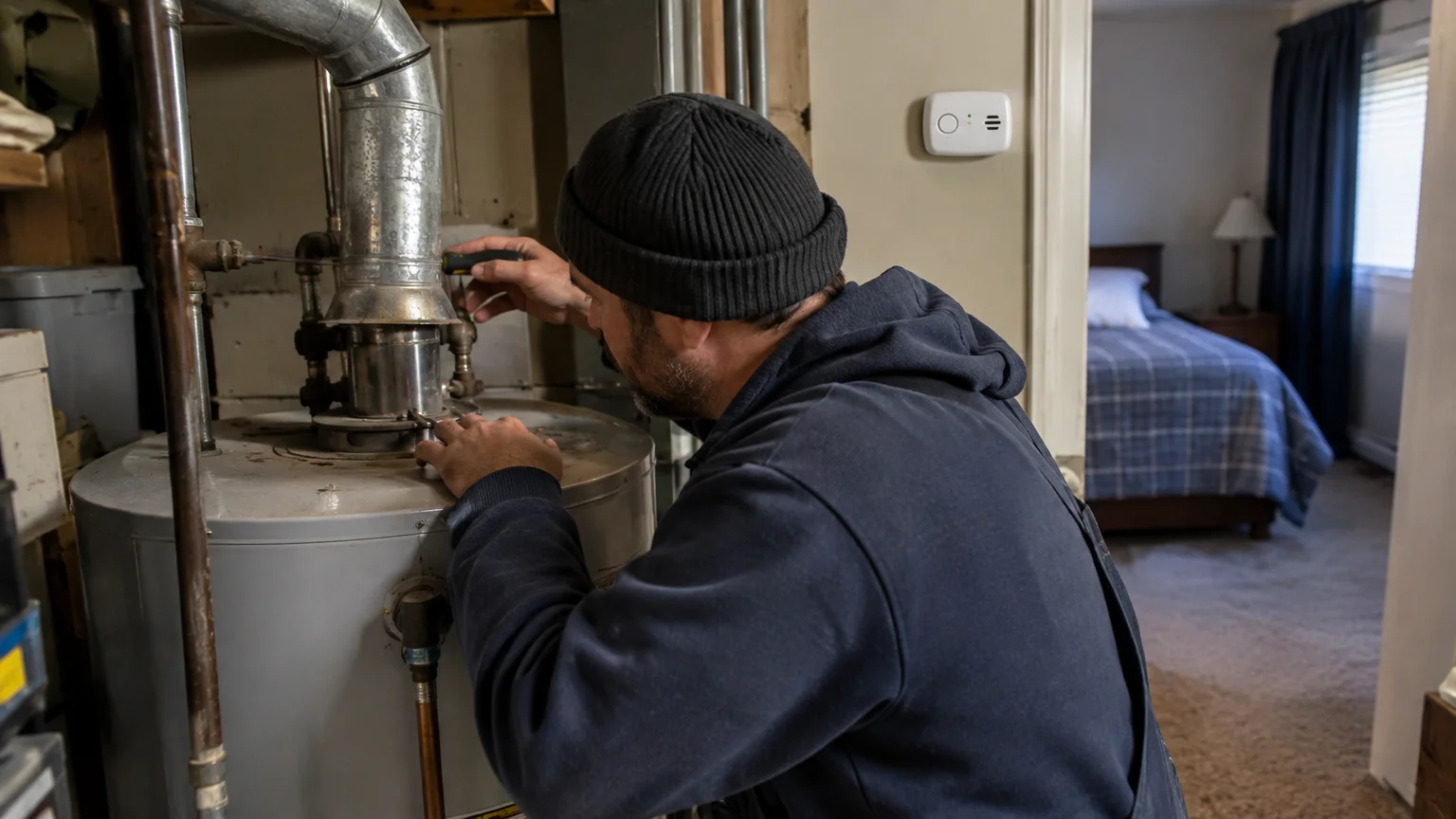
Gas units may also whistle or hum when a burner, vent, or gas control has a problem. Poor venting can create carbon monoxide risk. Carbon monoxide is a gas without color or smell that can cause severe illness or death. A working carbon monoxide alarm near sleeping areas adds protection, but it does not replace an inspection.
Can a noisy water heater be dangerous?
Some water heater sounds are harmless. Noise with gas odor, smoke, burning smells, leaking water, or a faulty relief valve can be dangerous. Main risks include gas exposure, carbon monoxide, electric shock, scalding water, pressure release, and water damage. Act quickly when a warning sign appears.
Leave the area when gas may be escaping. Do not use switches or flames near a suspected gas leak. If an alarm sounds, move outside and contact emergency services from a safe place. A heater that gives off smoke or a strong burning smell needs immediate attention.
Water can cause damage even when the heater still works. A puddle below the tank, wet insulation, or water spraying from a connection should not be ignored. The main water shutoff may limit damage if you can reach it safely. Only turn off the gas control or electrical supply when doing so does not place you in danger.
Scalding is another risk. Water that becomes much hotter can burn skin quickly. Children, older adults, and people with limited movement may face more danger. Until the cause is known, avoid unusually hot water and arrange a qualified inspection.
How can you troubleshoot a noisy water heater safely?
You can safely observe the unit, note when the sound happens, and look for visible leaks. Do not open sealed gas controls, remove electrical covers, drain an old tank without guidance, or adjust safety devices. Simple observations often give a plumber useful information without creating a new hazard.
A safe check can include these steps:
- Note whether the noise happens during heating, after a fixture closes, or all the time.
- Look for water around the base, valves, pipes, and discharge line.
- Check whether hot water is weak, too hot, rusty, or discolored.
- Listen from a safe distance and find whether the sound comes from the tank, pipes, or controls.
- Check for gas odor, smoke, burning smells, or a carbon monoxide alarm.
- Keep children away from the equipment until the problem is checked.
You may clean the outside of the unit and keep the area clear. The space should allow safe access. Do not store paint, paper, chemicals, or other flammable items near the heater. Never block vents or place items over the unit.
A qualified plumber should handle gas tests, electrical tests, relief valve work, tank flushing on a weak unit, burner service, and internal repairs. Household smell checks cannot replace professional gas testing. If gas is suspected, leave the building first.
Does water heater noise mean the unit needs repair or replacement?
Noise does not always mean a water heater needs replacement. Repair may make sense when the tank is sound and the issue involves a valve, thermostat, heating element, loose connection, or small pipe movement. Replacement may be more reliable when the tank leaks, corrosion is widespread, or several major parts are failing.
The unit’s age is only one factor. A newer heater with one failed part may be repairable. An older tank with repeated leaks, poor heating, and heavy sediment may not be a good repair choice. A plumber should inspect the tank, controls, connections, venting, and safety parts before suggesting a solution.
Replacement also depends on the property’s needs. Household size, hot water use, fuel type, space, venting, and electrical service all matter. A larger home or business may need a different capacity. A tankless system may suit some properties, but it may need changes to gas lines, wiring, venting, or water lines.
The final cost depends on parts, unit size, access, damage, urgency, and installation changes. A valve repair is usually less involved than replacing a failed tank. A written quote should confirm the final cost and complete work before it starts. Westlake Village Plumber can help Westlake Village property owners compare repair and replacement choices based on the system’s condition.
How do tank and tankless water heater noises compare?
Storage-tank heaters often make popping, rumbling, or crackling sounds. They hold and heat a large amount of water. Sediment collects at the bottom and can trap water near the burner or heating element. Tankless heaters do not store the same amount of water, so their sounds often come from fans, pumps, burners, valves, or restricted flow.
A tankless unit may hum during normal use. A soft fan sound may happen while the system removes heat. Whistling, loud vibration, repeated ignition attempts, or a sudden sound change may point to scale, poor flow, a sensor issue, or vent trouble. Scale is a hard mineral layer that can form inside water paths and heat exchangers.
Tankless systems need the right flow rate and proper fuel or electrical supply. If several fixtures run together, the unit may struggle when it was not sized for that demand. A qualified technician can check filters, inlet screens, valves, venting, temperature settings, and error codes.
Homeowners should not attempt a tankless water heater project without the right skills and permits. Tankless hot water heater installation may involve gas, wiring, venting, combustion, and water connections. Professional Water Heater Installation helps confirm that the selected unit fits the building and local rules.
How can a plumber diagnose and fix a noisy water heater?
A plumber starts by asking when the noise happens and what changed before it began. The inspection may cover the tank, burner or elements, valves, pipes, controls, venting, water pressure, and signs of leaks. Testing helps separate a water heater problem from a larger plumbing issue.
The plumber may listen during a heating cycle and operate nearby fixtures. The professional may test pressure, inspect the relief valve discharge, check electrical parts, review error codes, and assess the tank. Gas equipment may need safe combustion and leak checks. The exact steps depend on the heater type and reported sound.
Possible repairs include sediment service, valve replacement, element or thermostat repair, pipe support, pressure correction, relief valve service, or leak repair. Some faults require replacement instead. A tank leaking through its body cannot usually be repaired like a faulty outside valve.
Property owners should compare local plumbing professionals and look for experience with tank and tankless systems. The plumber should explain the cause, safety concerns, repair choices, and service limits in plain language. Reviews can help, but the inspection should guide the final choice. Westlake Village Plumber serves Westlake Village customers and can help identify a safe next step.
Key takeaways
- Popping and crackling often point to sediment inside a storage tank.
- Banging may come from tank buildup, water hammer, loose pipes, or pressure.
- Hissing near gas equipment should be treated as a possible safety issue.
- Whining and humming may involve valves, heating elements, wiring, or restricted flow.
- A plumber should handle gas, electrical, pressure, relief valve, and internal tank work.
Frequently Asked Questions
Is it normal for a water heater to make noise?
Some soft sounds are normal during heating. A tank may click as parts expand, while a tankless unit may hum as its fan or controls run. Loud, new, repeated, or worsening sounds should not be ignored. Noise with leaks, gas odor, smoke, or poor hot water needs prompt professional attention.
Can sediment make a water heater sound loud?
Yes. Sediment can settle at the bottom of a storage tank. Heated water becomes trapped below the mineral layer and then escapes in bubbles. These bubbles create popping, crackling, or rumbling sounds. A plumber can decide whether flushing is suitable or whether buildup and tank wear make another repair more useful.
Should a homeowner flush a noisy water heater?
Not always. Flushing may help a newer unit with loose sediment, but an old tank or weak drain valve may leak after service. Gas and electrical hazards also make careless work unsafe. You can ask a plumber to inspect the unit first and explain whether flushing is safe.
What should someone do if a water heater hisses?
Find the sound only from a safe distance and look for visible water. A hiss near a gas burner, gas control, or suspected leak requires leaving the building. Contact the gas utility or emergency services from outside. Do not touch wet electrical equipment.
When should a noisy water heater be replaced?
Replacement may be better when the tank leaks, corrosion is widespread, hot water stays unreliable, or several major parts fail. A single valve, thermostat, or element problem may support repair. A qualified plumber should inspect the system and compare its condition with the property’s hot water needs.
Conclusion
A water heater making noise should not be judged by sound alone. Popping may point to sediment, banging may involve pressure or moving pipes, and hissing may signal a leak or serious gas concern. Safe observation can help, but gas, electrical, pressure, and internal tank work belongs to a qualified plumber.
Contact us to arrange professional water heater help for your home or business in Westlake Village. Westlake Village Plumber can inspect the system, explain the findings, and help you choose a suitable repair or replacement path.