To learn how to choose a bathroom faucet, first check the sink’s holes, shape, and available space. Then think about who uses the bathroom and what will make daily use easier. A good match fits the basin, feels simple to control, and is easy to care for, helping avoid fit problems and leaks.
A faucet affects how a bathroom looks and works each day. The right choice depends on more than its style or finish. Sink design, water flow, handle access, and the plumbing under the basin all matter. These checks help homeowners, tenants, landlords, and property managers compare faucets before choosing one.
Table of Contents
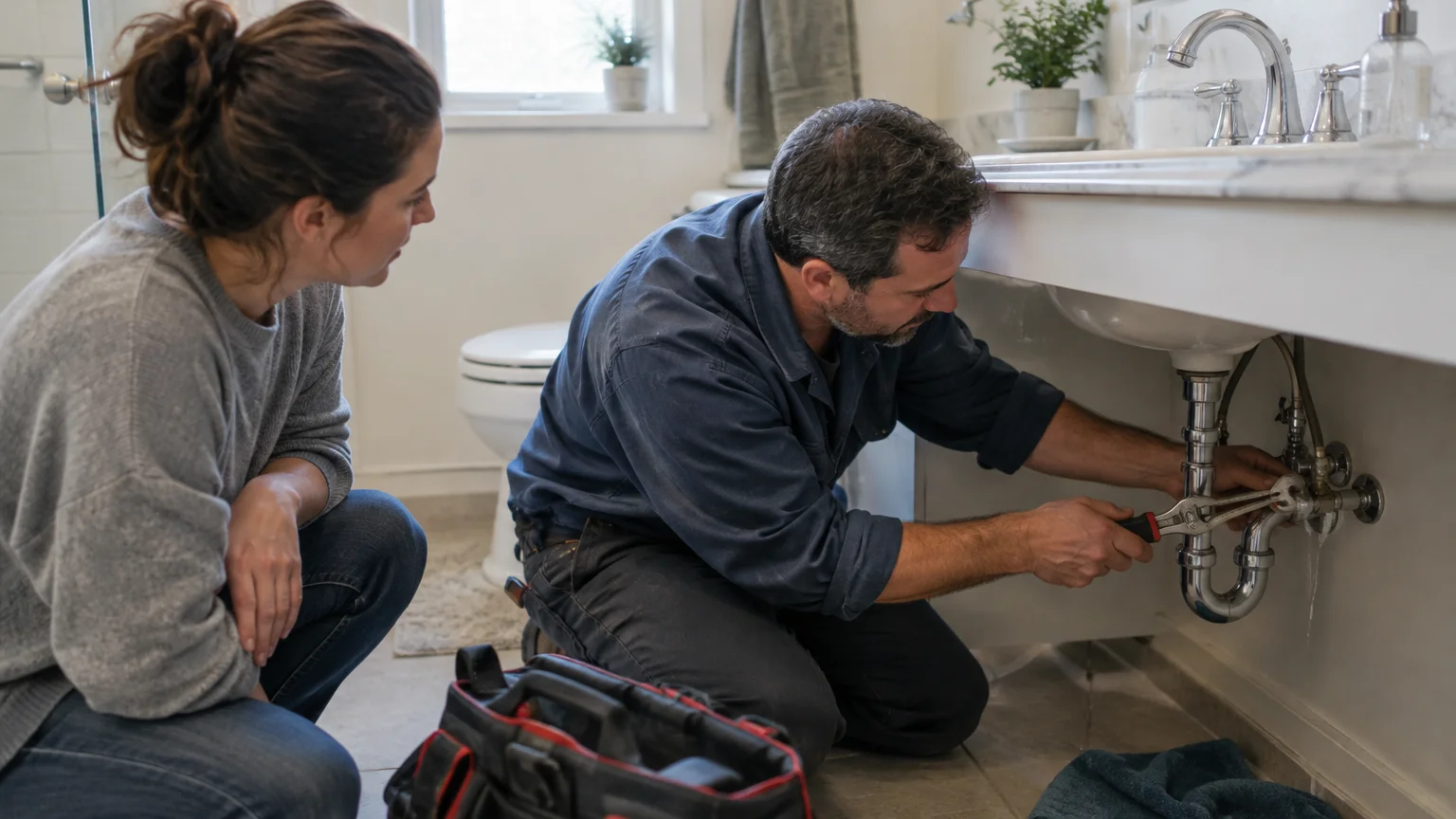
- How do you choose the right bathroom faucet?
- How do you check whether a faucet fits your sink?
- Which bathroom faucet style and handle type should you choose?
- Which faucet materials and finishes hold up best?
- How can you choose a water-efficient bathroom faucet?
- Should you repair or replace your bathroom faucet?
- What should you consider before installing a new bathroom fixture?
- Frequently Asked Questions
- Key Takeaways
- Conclusion
How do you choose the right bathroom faucet?
Choose a faucet that fits the sink, works for daily needs, and is simple to clean. Before looking at styles, check the basin and consider who will use it. A guest bathroom may need a sturdy, simple fixture. A shared family bathroom may need handles that children or older adults can use with ease.
Step 1: Check the sink and current faucet
Look at the faucet holes, basin shape, and open space around the sink. If you plan to replace an old faucet, note how it attaches and where its handles sit. A new fixture must match these details unless you are also changing the sink or counter. Taking a clear photo can help you remember the layout while comparing options.
Step 2: Think about daily use
Consider how often people use the sink and whether they can reach the handles. A single handle can be easy to adjust with one hand. Separate handles give clear control over hot and cold water, but need more room on the sink or counter. Think about ease of use before settling on a style.
Step 3: Set your priorities
Decide what matters most: easy cleaning, simple controls, a certain look, or lower water use. Make a short list before comparing fixtures. It can help you tell useful features apart from details that may not matter during everyday use. Keep the sink’s size and the needs of the people using it in mind.
Bathroom plumbing fixtures include faucets, sinks, drains, and the pipes that carry water to and from them. These parts need to work together. A faucet may look right in a store but still be a poor match for a shallow basin or a narrow counter. Checking the whole setup helps prevent a poor fit.
Bathroom layouts and plumbing can differ from one Westlake Village property to another. Westlake Village Plumber can help property owners consider faucet needs when planning a repair or replacement. The best option fits the room and its users, not only current styles. Check the sink and nearby plumbing before making a final choice.
How do you check whether a faucet fits your sink?
Check the sink’s hole count, hole spacing, and mounting style before you choose a faucet. Then compare the faucet’s height and reach with the basin. These simple checks can help prevent a fixture from covering the wrong holes, splashing water, or crowding nearby space. Read the faucet instructions for details about a proper fit.
Match holes and mounting style
Some sinks have one faucet hole. Others have three holes for the spout and handles. A centerset faucet has its spout and handles joined on one base. A widespread faucet has separate parts that sit farther apart. A wall-mounted faucet attaches to the wall, so the sink and plumbing must suit that setup.
Do not assume a cover plate will fix every mismatch. A deck plate can cover extra holes on some sinks, but it may not work with every faucet or basin. Check the maker’s fit guide and the sink details before buying. If the sink is already in place, count the holes and take a clear photo to help narrow your options.
Check reach, height, and clearance
The spout should direct water toward the middle of the basin, not onto its edge. A short spout can make hand washing awkward. A spout that reaches too far may splash water onto the counter. The depth and shape of the sink affect where the water lands, so compare them with the faucet’s reach.
Check the space behind the faucet, too. A tall handle or spout may hit a wall, mirror, shelf, or medicine cabinet. Under the sink, look for room around the water lines and shutoff valves. These valves control water to the faucet. Tight cabinets can make the plumbing work harder to reach.
Write down the hole pattern and read the product instructions before you select a fixture. If you are replacing the sink or counter, choose those parts together. This helps keep the faucet, basin, and bathroom plumbing in a useful layout. If you are unsure about the fit, have the sink details ready for a plumbing review.
Which bathroom faucet style and handle type should you choose?
Choose a faucet style that matches the sink holes and the space around them. Single-hole and centerset faucets can suit compact sinks. Widespread and wall-mounted faucets need more planning and room. The best handle type is one that the people using the bathroom can control without trouble.
A single-hole faucet puts its spout and handle together in one opening. This can leave a small vanity feeling less crowded. A centerset faucet also keeps the parts close, but the spout and handles sit on one shared base. Both styles can work well where counter space is limited.
A widespread faucet has a separate spout and handles. It may suit a larger sink or counter, but the holes must match the fixture’s spacing. Wall-mounted faucets can leave more counter space open and create a simple look. Their water lines must come through the wall in the right place, so they are often easier to plan during a bathroom update.
A single-handle faucet lets a user adjust water with one control. It may be easier for someone with limited hand strength or movement. A two-handle faucet has separate hot and cold controls. Some people like having clear control of each, though finding the right mix can take more steps.
Think about the whole room before choosing a style. A high spout can work well with a deep basin, but may splash in a shallow one. A wide fixture may look out of place on a small sink. Bring the sink model details or a clear photo when you compare faucets.
The faucet is only one part of bathroom plumbing. The sink, drain, supply lines, and shutoff valves all affect how well it works. If a remodel changes the sink location, the water lines or drain may need changes, too. Bathroom Installations may be useful when planning a larger fixture update.
Which faucet materials and finishes hold up best?
Choose a fixture with a sturdy body, reliable working parts, and a finish that suits the room’s cleaning needs. Product details can explain what a faucet is made of and how to care for it. The finish alone does not tell you everything about the fixture’s quality. Read the maker’s instructions before you buy.
Inside a faucet, a valve controls the flow and mix of hot and cold water. Ceramic disc valves use smooth ceramic parts to control water. Other valve types use different parts. Read the product details and care guide, and check whether the maker offers replacement parts for that model.
The faucet body and handles may use different materials. Look for clear product details instead of judging only by how the surface looks. A well-fitted fixture should feel steady and should not wobble during normal use. Follow the installation guide so the faucet is held in place without damage.
Finishes range from polished metal looks to darker or brushed surfaces. Choose one that works with nearby hardware and is easy for you to clean. Some finishes show water spots or fingerprints more than others. A soft cloth and the maker’s care advice can help protect the surface. Rough scrubbers or strong cleaners may harm some finishes.
In a busy shared bathroom, easy cleaning and parts you can find may matter more than an unusual finish. In a guest bathroom, matching the faucet to the sink and other fittings may be more important. Think about how the room is used and how much care you want to give the fixture.
Read the warranty terms and installation instructions before buying. Keep the model details in a safe place for later repairs. If the faucet leaks, knowing its make and model can help you find the right part or repair option. This can also help a plumber check which parts suit the fixture.
How can you choose a water-efficient bathroom faucet?
Look for a faucet that uses water wisely and still gives a comfortable stream. Its flow rate tells you how much water it can deliver over time. Compare the details listed by the maker and, when possible, try the stream before choosing. It should suit hand washing and other normal sink use.
Some faucets have an aerator. An aerator is a small fitting at the spout that mixes air into the water stream. It can help shape a steady stream while limiting water use. Some models also have flow controls. Check the product details to see how these features work and whether you can clean or replace the aerator.
The U.S. Environmental Protection Agency’s WaterSense program lists bathroom faucets and accessories that meet its water-use and performance rules. Its WaterSense bathroom faucets page explains the program and what to look for. This can be one point to compare, along with fit, comfort, and care needs. A label does not replace checking whether a faucet suits your sink.
A faucet that uses less water should still feel useful. If the stream seems weak, first check whether grit or mineral buildup blocks the aerator. Turn off the faucet and remove the aerator only if the maker’s guide allows it. Rinse it gently. Do not force a part that will not turn, since that may harm the finish or spout.
Low water flow at several fixtures may point to a plumbing problem, not a faucet choice. Compare the flow at other taps and check that easy-to-reach shutoff valves are open. If the problem continues, a plumber can check the water supply and fixture. Bathroom sink drain cleaning may help with a slow drain or clogs, but it will not fix low water pressure.
Should you repair or replace your bathroom faucet?
A faucet may be worth repairing when the problem is limited and the right part is available. Replacement may make more sense when leaks return, parts are worn, or the faucet no longer suits the sink or household. First find where the water comes from. The issue may be at the faucet or below the basin.
A drip from the spout may come from worn parts or grit inside the faucet. Water around the base may mean the fixture is loose, a seal is worn, or water is splashing from the basin. Moisture under the sink may come from a water line, drain, or faucet body. Dry the area and watch where water appears, but do not ignore a leak that keeps coming back.
Rust, cracks, loose handles, or controls that are hard to use can also signal a problem. Mineral buildup may reduce flow or make a handle stiff. A homeowner can wipe the faucet and clean a removable aerator when the maker’s instructions allow it. You do not need a professional for simple cleaning or safe checks when there is no active leak.
Turn off the water at the shutoff valves before a repair that means opening a faucet connection. If a valve will not turn, a pipe is damaged, or water keeps escaping, stop and get help. Do not force old fittings. Doing so can turn a small repair into a larger leak.
Consider replacement if the faucet is badly rusted, leaks from its body, or has parts you cannot find. Sink Repair may help with sink leaks and drainage problems. Faucet Repair And Replacement may be useful when the fixture itself needs attention. The right choice depends on the fault, the sink’s condition, and whether a matching fixture or part is available.
Drain problems are separate from faucet problems, even when both are near the sink. A slow drain or clog may need drain cleaning or drain repair, while a dripping spout needs attention at the faucet. If water is escaping quickly or causing damage, emergency plumbing help may be needed. Knowing where the water starts can help you explain the issue clearly.
What should you consider before installing a new bathroom fixture?
Before installation, make sure the new faucet fits the sink and that you can shut off the water safely. Read the maker’s instructions, clear the cabinet, and check the visible water lines and drain. Preparing the space can help prevent loose fittings, poor seals, and water damage.
Prepare the sink and plumbing
Take items out from under the sink and check the shutoff valves. Look for rust, drips, and signs of old leaks. Keep a towel and small container nearby to catch water in the lines. If the valves do not work, do not count on them to stop water during the job.
Know when to get help
A homeowner may be able to replace a faucet when the valves work, the pipes are sound, and the instructions are clear. Professional help is a better choice when pipes are rusty, valves are stuck, the fixture does not fit, or plumbing must move. A plumber can check that connections are secure and the faucet works without leaks.
After installation, turn the water on slowly. Look for drips at the water line connections and around the faucet base. Run both hot and cold water, then check under the sink again. If you see water where it should not be, turn off the valves if safe and fix the leak before using the faucet as usual.
A bathroom update may involve more than a faucet. Replacing a sink can change where the drain sits. Moving a fixture may mean changing pipes behind the wall or under the floor. A bathroom plumbing diagram can show how fixtures and pipes relate, but it may not match an older home. Check the actual layout before work begins.
Westlake Village Plumber serves property owners planning faucet repairs, replacements, or installation. In Westlake Village, sink styles and plumbing layouts can differ between homes and business spaces. Check the sink, nearby fixtures, and the space below the basin before work starts. This helps you spot fit concerns early.
Frequently Asked Questions
How do you know if a faucet will fit your sink?
Check how many holes the sink has, how far apart they are, and whether the faucet attaches to the sink, counter, or wall. Compare those details with the faucet’s installation guide. Also check the spout reach, basin depth, and space behind the faucet for handles or nearby walls. These steps can help prevent fit problems.
What causes low water pressure at a bathroom faucet?
A blocked aerator, partly closed shutoff valve, or worn faucet part can limit flow at one sink. If several fixtures have low flow, the cause may be elsewhere in the plumbing. Check easy-to-reach valves and clean a removable aerator only as the maker advises. Get help if the problem continues or you find a leak.
Can a homeowner replace a bathroom faucet?
A homeowner may replace a faucet when the shutoff valves work, the pipes are in good shape, and the new fixture fits. Follow the maker’s instructions and check for leaks after turning the water back on. Get professional help if a valve is stuck, pipes are rusty, or the connections do not match.
Should a dripping faucet be repaired or replaced?
A drip may stop after cleaning or replacing a worn part, if the faucet is in good shape and the part is available. Replacement may be a better choice when the body is damaged, rust is present, or leaks keep returning. Find the source first, since water may come from a connection under the sink.
How can a bathroom faucet use less water?
Choose a faucet with clear water-use details and consider one recognized by the WaterSense program. An aerator can shape the stream and may be removed for cleaning. A water-saving faucet should still meet the household’s needs. Compare its listed features and check whether the stream feels comfortable during normal use.
Key Takeaways
- Check sink holes, mounting style, basin depth, and faucet reach before buying.
- Choose handles, height, and finish based on daily use and cleaning needs.
- Compare water-use details and features such as aerators.
- Clean an accessible aerator and check safe shutoff valves yourself.
- Get help for stuck valves, damaged pipes, or leaks that continue.
Conclusion
The best bathroom faucet fits the sink, works well for its users, and is easy to care for. Checking the holes, reach, handles, finish, and water flow can help prevent a poor match. For help with faucet repair, replacement, or installation, Contact us through Westlake Village Plumber to discuss the work your property needs.
If you are not sure what you are dealing with, it is worth having someone look at it before it turns into a bigger job. Get in touch with Westlake Village Plumber today and we will tell you where you stand.