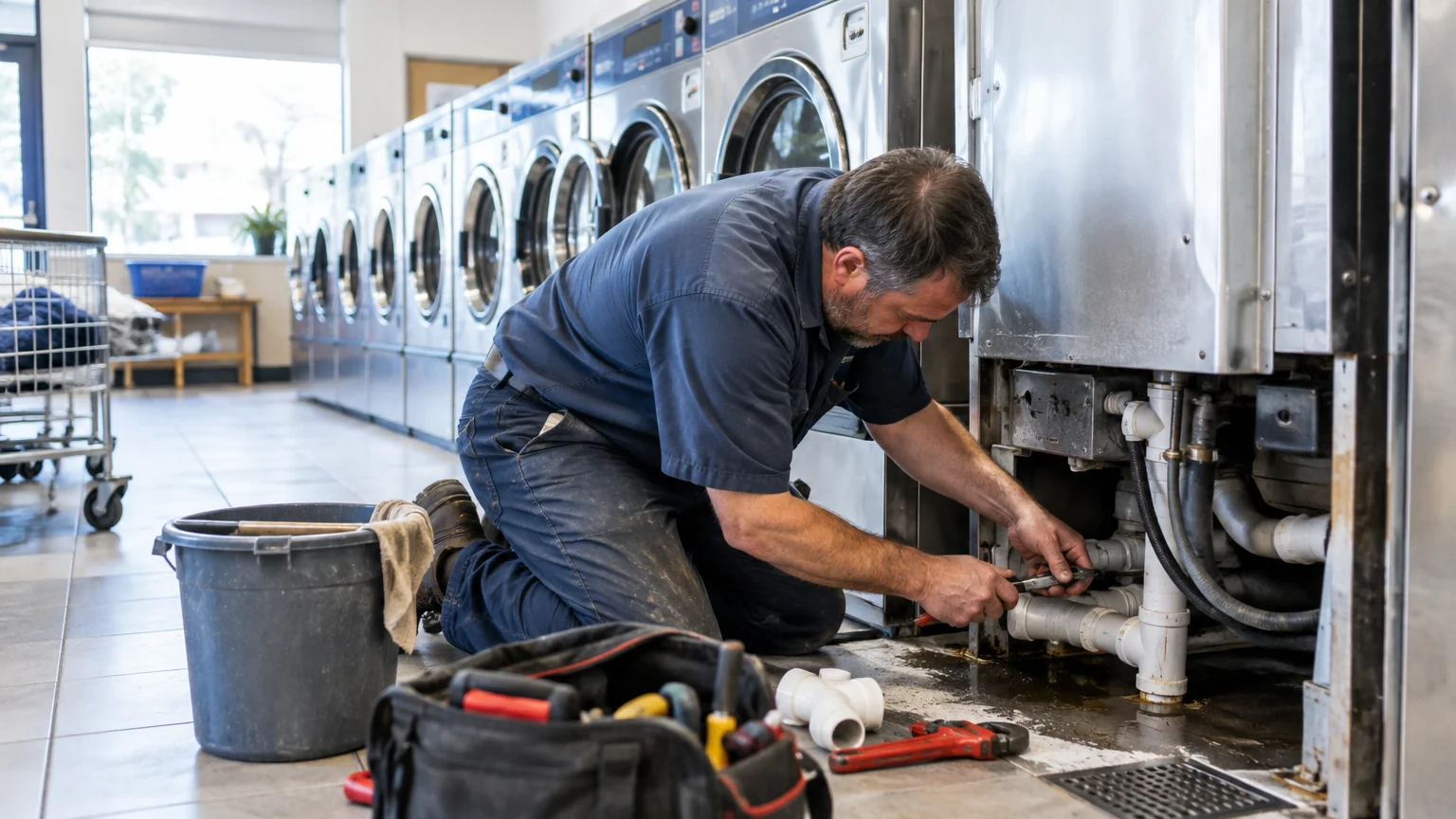
Laundromat plumbing problems often involve slow drains, leaking water lines, low pressure, or a water heater that cannot keep up. Heavy washer use can strain shared pipes and equipment. In Westlake Village, owners can reduce service interruptions by watching for early warning signs, keeping screens clear, and calling a plumber when issues return or affect several machines.
What plumbing problems commonly affect laundromats?
Laundromats use water all day, so one small fault can affect more than one machine. Common problems include slow drains, leaking supply lines, low water pressure, sewer odors, and water that changes temperature. The cause may be one washer, a shared pipe, or the building’s main plumbing system.
How do heavy washer loads strain drains and sewer lines?
Commercial washers send a lot of used water into drain pipes during each cycle. When many machines run at once, shared drains must carry a steady flow. A drain line is the pipe that carries wastewater away from machines. If it is too small, damaged, or partly blocked, water may drain slowly or back up.
A washer that shakes or shifts can also put strain on hoses and pipe joints. Loose connections may begin to leak over time. Lint, small items, and soap residue can add to the problem when they enter the drain system. Owners can keep lint screens clean and make sure machines sit level, following the equipment maker’s instructions.
What causes leaks, pressure changes, and water supply interruptions?
Leaks can start at worn hoses, loose fittings, damaged shutoff valves, or rusty pipes. A shutoff valve controls water flow to a machine or part of a pipe. A leak by one washer may come from that connection. Wet flooring near several machines may point to a shared line or a hidden pipe problem.
Low water pressure may come from a partly closed valve, a leak, mineral buildup, or a problem with the building’s water supply. If several washers fill slowly, the cause may not be one machine. Westlake Village Plumber can help find whether the issue is with a fixture, water line, drain, or heater. A sudden leak or strong sewer smell needs prompt attention.
Why do laundromat drains clog or back up?
Laundromat drains can clog when lint, detergent residue, or other debris builds up inside pipes. A blockage may slow one machine or affect a shared drain used by several washers. Repeated backups need attention because wastewater can harm floors and equipment. They may also point to a deeper sewer line problem.
How do lint, detergent, and debris contribute to blockages?
Lint can enter a drain if screens are missing, damaged, or not cleaned. Detergent and fabric softener may leave residue that sticks to pipe walls. Small items, such as coins or tags, can get caught in a washer drain or pipe bend. As debris builds up, wastewater has less room to flow.
Owners can clean lint screens and check visible washer areas when the equipment is off and the maker’s directions allow it. They can also clear loose debris from floor drains if it is easy to reach. Do not use harsh drain chemicals in commercial equipment unless the maker says they are safe. These products may harm parts or fail to clear a blockage deep in the line.
What warning signs suggest a drain or sewer line needs attention?
Slow drainage, gurgling sounds, water rising in a nearby floor drain, or a bad smell can signal a blockage. If the same problem returns after cleaning a screen, the blockage may be deeper in the drain. When more than one washer has trouble, a shared pipe may be the cause.
Owners can note which machines are affected and when the issue happens. This record may help a plumber find a pattern, such as trouble during busy wash times. A camera drain inspection uses a small camera on a flexible cable to view a pipe’s inside. It can help locate a clog or damage before anyone opens the floor.
A sewage backup, water spreading over the floor, or wastewater entering a work area needs prompt plumbing help. Keep people away from the water, and stop using connected machines if it is safe. A plumber can check the drain and explain whether cleaning or repair is needed. This kind of emergency plumbing issue should not be left to wait.
What causes laundromat water heater problems?
Commercial water heater problems can cause cold water, changing temperatures, leaks, or service interruptions. The cause may be a failing heater, a bad control, sediment buildup, a supply issue, or demand that is too high for the system. A licensed plumber can test the heater and find which part needs attention.
Why might commercial washers receive water that is too cold or inconsistent?
Water may be too cold when the heater cannot meet demand, its settings are wrong, or a part is failing. A mixing valve can also change the temperature. A mixing valve blends hot and cold water to help control the water sent to equipment or fixtures.
If only one washer has a temperature problem, the washer or its connection may be at fault. If several washers have the same issue, the shared heater or hot-water line is more likely. Owners can check that the heater has power or fuel, look for an error message, and read the maker’s basic instructions. Do not remove heater covers or adjust gas parts.
A heater that leaks from the bottom may have a loose drain valve, water from a nearby pipe, or a damaged tank. Water can travel along a surface, so the puddle may not show where the leak began. Turn off the water supply only if the valve is easy to reach and safe to use. A gas smell is an urgent safety concern: leave and call the gas utility or emergency services from a safe place.
When should a water heater be repaired or replaced?
Repair may be a good choice when one worn part is the problem and the tank or main unit is still sound. Replacement may make more sense if the tank leaks, the system fails often, or parts are hard to get. A plumber should consider the unit’s condition, the laundromat’s water needs, fuel, venting, and local code rules.
Tank heaters hold hot water in an insulated container. Tankless heaters warm water as it flows through the unit, but they also have limits. The right system depends on how many washers need hot water at once and the building’s setup. Westlake Village Plumber can review water heater repair or replacement options for commercial buildings and explain what the system can support.
How can laundromat owners prevent plumbing disruptions?
Regular checks can help owners spot small leaks, slow drains, or temperature changes before service is affected. Some basic upkeep is safe to do without a plumber. Work on gas lines, electrical parts, hidden pipes, and commercial heaters should be left to qualified professionals.
What routine checks help protect drains, water lines, and equipment?
A short check can help staff notice changes early. Owners can ask staff to look at visible hoses, floors, drains, and machine performance during normal opening or closing tasks. Keep notes about repeat issues so a plumber can see where and when they happen.
- Clean washer lint screens as the equipment maker directs.
- Look for water around hoses, valves, and machine bases.
- Notice slow drains, unusual sounds, or sewer odors.
- Check floor drains for visible debris.
- Record temperature changes and which machines are affected.
These checks do not replace professional service. Staff should not reach into moving equipment, open heater panels, or use tools to clear a deep blockage. If a leak is near electrical equipment, stay clear and follow the site’s safety plan. Turn off water only when the valve is easy to reach and staff can use it safely.
When should a commercial plumber inspect the system?
Arrange an inspection when a drain keeps backing up, several machines have low pressure, leaks return, or hot water changes without a clear reason. A plumber can test water flow, look at visible pipes, and decide whether a camera drain check or heater test may help. Early diagnosis can limit damage and help owners plan plumbing repair around business needs.
In Westlake Village and the nearby service area, a local commercial plumber can also check whether the system suits the washer load and building layout. Westlake Village Plumber can explain what was found and what steps may come next. Plumbing costs depend on the fault and work needed, so the final cost is confirmed on a quote. Seek urgent help for active flooding, sewage backup, or a suspected gas leak.
Key takeaways
- Heavy washer use can strain shared drains, water lines, and heaters.
- Lint, residue, and debris can slow drains or cause backups.
- Problems affecting several machines may involve shared plumbing.
- Owners can check visible areas and clean screens as directed.
- Repeat leaks, backups, or hot-water changes need a professional diagnosis.
Frequently Asked Questions
Why does a laundromat washer drain slowly?
Lint, detergent residue, or a small object may be blocking the drain. A shared pipe may also be partly blocked, especially when several machines use the same line. Clean the washer’s lint screen if the maker allows it. If the drain stays slow or other machines are affected, ask a plumber to check the line.
What should owners do if a water heater leaks from the bottom?
Keep people away from the water and check whether it may come from a nearby pipe or valve. If it is safe, turn off the water supply to the heater. Do not open the unit or touch wet electrical parts. Contact a plumber to find the source, since a leaking tank may need to be replaced.
Why is hot water inconsistent in a laundromat?
The heater may be struggling to meet demand, or a control, mixing valve, or hot-water line may have a fault. If one washer is affected, check its settings and instructions first. If several machines receive uneven hot water, a plumber can test the shared system and heater.
When is a laundromat plumbing problem an emergency?
Active flooding, sewage backing up into the building, or a suspected gas leak needs urgent action. Keep people away from the affected area. If you smell gas, leave and contact the gas utility or emergency services from a safe place. For water or sewage, stop using affected equipment if safe and seek prompt plumbing help.
Conclusion
Laundromat plumbing problems may start with one hose, drain, or heater part, but shared systems can affect many machines. Routine checks help owners notice changes early. Repeat backups, leaks, and hot-water problems need professional diagnosis. Contact us to discuss a laundromat plumbing concern with Westlake Village Plumber.