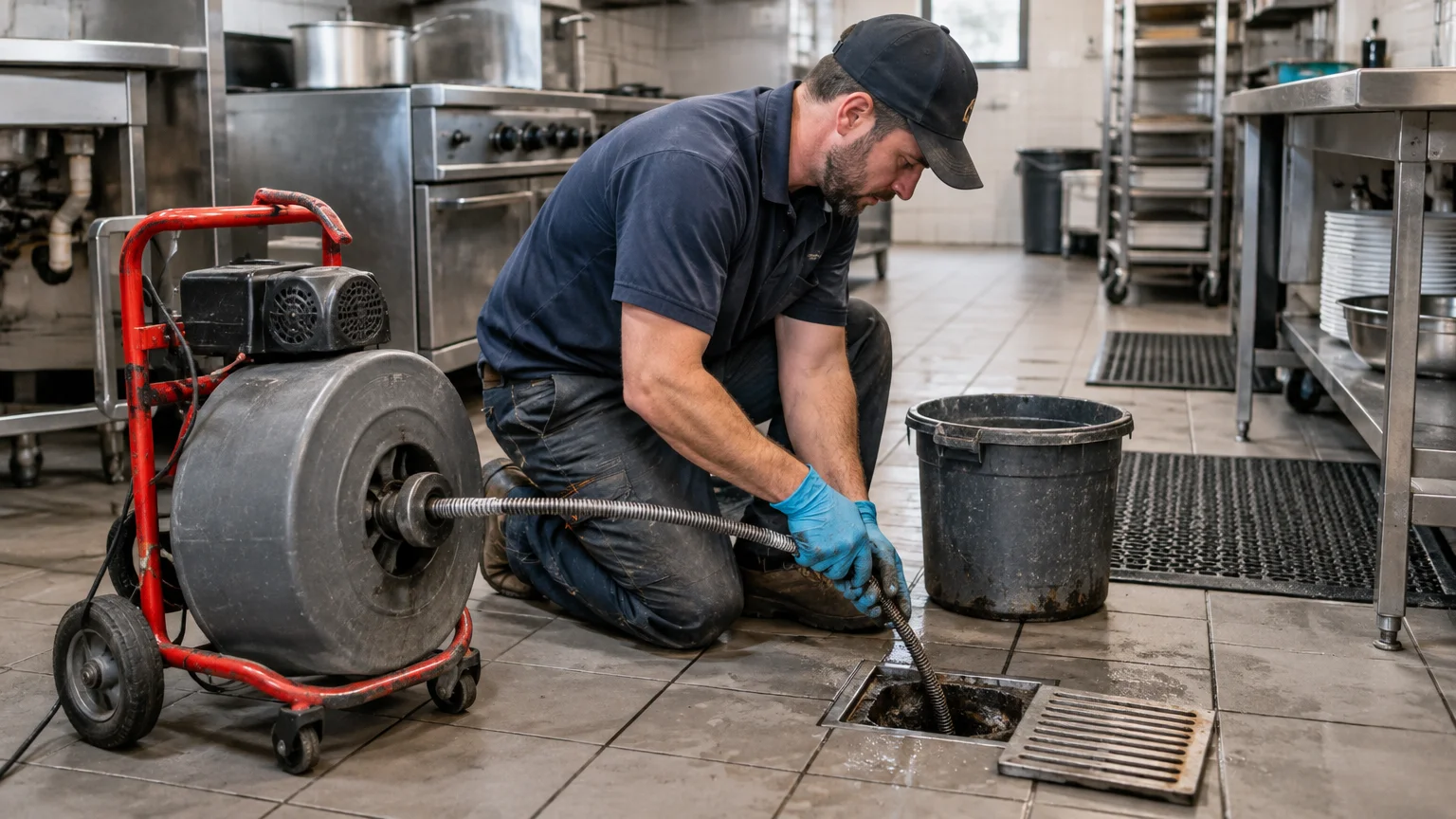
Commercial floor drain problems can point to a local clog or a larger plumbing issue. Slow flow, standing water, repeated clogs, bad smells, or gurgling are common signs. Staff can clear visible debris and keep drains tidy, but sewage backups and problems that return need a licensed plumber to find the cause.
What are the common signs of commercial floor drain problems?
Slow drainage, standing water, repeat clogs, foul odors, and gurgling can all point to a drain issue. One sign may come from a clog near the drain. Several signs at once may mean the problem reaches a shared drain or sewer line. Early checks can help businesses limit water damage and keep work areas safe.
How do slow drainage, standing water, and recurring clogs differ?
A slow drain takes longer than usual to carry water away. Standing water means water is draining poorly or not moving at all. A recurring clog comes back after someone clears the drain. This may mean buildup remains in the pipe, or that a deeper issue needs attention.
The location of the problem can offer a useful clue. If one floor drain is slow, the clog may be close to it. If several drains nearby slow down at once, they may share a pipe with a blockage. Staff can note which drains are affected and when the trouble happens. These details can help a plumber find the cause.
What do odors, gurgling, and sewer backups indicate?
A bad smell may come from waste, grease, or water left in the drain. A drain trap is a curved pipe section that holds water and helps block sewer gas. If the trap dries out or stops working, smells may enter the building. Gurgling can mean air is trapped or water is having trouble moving through a pipe.
A sewer backup is more serious. It happens when wastewater flows back through a drain instead of away from the building. Keep people away from dirty water, and do not try to wash it into another drain. Westlake Village Plumber can help businesses check recurring drain concerns and decide when plumbing service may be needed.
What causes floor drains to clog or back up in commercial buildings?
Grease, food scraps, dirt, and other debris can collect inside commercial drain pipes. Heavy use can make buildup more likely, especially in kitchens, wash areas, and busy work spaces. A clog can also come from a damaged pipe, poor pipe slope, or a sewer line problem. The right repair depends on where the blockage formed and what caused it.
How do grease, food waste, and sediment affect commercial drains?
Grease can cool and stick to the inside of a pipe. Food scraps and sediment can catch on it and make the opening smaller. Over time, water may drain slowly, and buildup may block the pipe. Floor drains should not be used to get rid of cooking oil or food waste.
A drain snake is a tool that turns or pushes through a pipe to break up or remove a clog. It may help with some blockages, but it will not stop grease from collecting again. Baking soda and vinegar are common home drain-cleaning suggestions, but they may not clear a deep or dense clog in a commercial drain. Drain cleaning enzymes are products that can help break down some organic waste. They cannot fix damaged pipes or clear every blockage. Staff should follow product labels and workplace safety rules.
Can sewer line damage, poor installation, or heavy use cause recurring problems?
Yes. A cracked, crushed, or shifted sewer pipe can slow water flow and cause repeat backups. A pipe with poor slope may not carry water and waste away as it should. These issues can look like a stubborn clog, but clearing the drain alone will not fix the real cause.
Heavy use can also put more strain on a drain system. A drain that handles frequent cleaning, food waste, or wash water may need a care plan that fits its use. If several drains clog again soon after clearing, the issue may be farther down a shared line. A plumber can check for pipe damage, buildup, and other causes before suggesting a repair.
How are commercial floor drain problems diagnosed and repaired?
A plumber first checks which drains are affected and asks when the trouble began. They may look at the drain opening, test how water flows, and check for signs of a wider backup. The right fix depends on what they find. A small clog may need clearing, while repeat trouble may call for a camera check or sewer line repair.
When are drain cleaning and mechanical clearing appropriate?
Drain cleaning can remove grease, dirt, and other buildup from a pipe. Mechanical clearing uses tools, such as a drain snake, to break up or pull out a blockage. These methods may work for a clog that can be reached and does not come from a broken pipe. The plumber chooses a method based on the drain and type of clog.
An enzyme product may help with some organic buildup, but it cannot clear every clog. Staff should not mix cleaning products or pour harsh chemicals into a drain without checking product directions and site rules. This can create unsafe fumes or harm pipes. For one slow drain with no backup, staff can remove visible debris from the drain cover and keep the area clear. A professional is not needed for that simple task when site rules allow it.
When might a plumber use a camera inspection or repair a sewer line?
A camera inspection uses a small camera on a cable to look inside a pipe. A plumber may suggest one when clogs keep returning, several drains are affected, or the cause is not clear. The camera can help find buildup, cracks, root growth, or a shifted pipe.
If the pipe is damaged, clearing the clog may only help for a short time. The plumber can explain whether the pipe needs repair or replacement and which part of the system is affected. A sewer backup, wastewater near a work area, or repeat clogs needs prompt professional help. Westlake Village Plumber can explain drain cleaning and repair options for local properties.
How can businesses prevent recurring floor drain problems?
Businesses can reduce repeat clogs by keeping grease, food waste, and loose debris out of floor drains. Regular checks can also help staff spot slow flow, smells, or standing water before a backup occurs. A care plan should fit the building’s use and the kinds of waste that enter its drains.
What maintenance practices help control grease and debris?
Staff can keep drain covers in place, remove visible debris, and clean around drains during routine upkeep. In food-service spaces, grease and food scraps should go into approved disposal or collection systems, not floor drains. Staff should also note changes in drain flow instead of waiting until water stops moving.
Useful steps include:
- Keep drain covers clear and in place.
- Keep cooking grease and food scraps out of floor drains.
- Record repeat clogs, slow flow, odors, or gurgling.
- Follow product labels and workplace safety rules for drain products.
- Arrange drain cleaning when buildup returns or flow slows again.
These steps can help staff spot changes early, but they cannot fix a damaged pipe. Enzyme products may suit some care plans, yet they should not replace a plumber’s check when a drain backs up or keeps clogging. Businesses should follow local rules for waste and grease handling in Westlake Village. Businesses in Westlake Village can track these changes during routine checks.
When should a business call a licensed plumber?
A business should call a licensed plumber when a clog returns, several drains slow at once, wastewater backs up, or a bad smell continues after basic cleaning. A plumber can check whether the issue is limited to one drain or affects a shared line. Acting quickly may help prevent damage to floors, equipment, and nearby work areas.
Staff should keep people away from wastewater and follow the building’s safety plan while waiting for help. They should not try to open or repair a sewer line. A drain cover with visible debris is different: staff can clear that debris when site rules allow it. For recurring commercial floor drain problems, a qualified check can find the cause and the next step.
Key takeaways
- Slow flow, standing water, odors, and repeat clogs can signal drain trouble.
- Grease, food scraps, sediment, heavy use, and pipe damage are common causes.
- Staff can clear visible debris, but repeat clogs need professional attention.
- Camera checks can help find problems deeper inside a pipe.
- Keeping waste out of drains can help limit buildup and backups.
Frequently Asked Questions
What causes a commercial floor drain to smell?
A floor drain may smell when waste or grease collects in the pipe, or when its water-filled trap is dry or not working well. A sewer smell that keeps returning can point to a wider plumbing issue. Staff can clear visible debris, but should ask a plumber to check smells that continue.
Can a drain snake clear a commercial floor drain?
A drain snake can break up or remove some clogs in a commercial floor drain. It may not remove all grease buildup or fix a damaged pipe. If a drain clogs again soon after clearing, or several drains are affected, a plumber can look for a deeper cause.
Do baking soda and vinegar clear a blocked floor drain?
Baking soda and vinegar may not clear a deep, dense, or recurring commercial drain blockage. They do not repair a cracked pipe or remove every kind of buildup. Staff should follow site safety rules and product directions, and avoid mixing drain products. For repeat clogs, a plumber can find the cause.
When is a floor drain backup an emergency?
A floor drain backup needs prompt attention when wastewater enters the building, spreads near people or equipment, or affects more than one drain. Keep people away from the water and follow the site safety plan. Contact a licensed plumber to find the source and help limit further damage.
Conclusion
Commercial floor drain problems can begin with slow flow and grow into repeat clogs or a sewer backup. Staff can keep drain covers clear and stop grease and food scraps from entering drains. A plumber should check repeat problems, several affected drains, and any wastewater backup. Contact us to discuss a drain concern with Westlake Village Plumber.