A plumbing snake is a long, flexible cable made to reach clogs inside a drainpipe. If you are asking what does a plumbing snake look like, picture a metal coil with a small working tip and a handle, drum, or motor. Its shape changes by model, so the right one depends on the drain and the job.
A snake may look simple, but its parts each have a purpose. Knowing how the tool looks can help homeowners choose a safer option and spot when a clog needs expert help. Westlake Village Plumber can help property owners understand drain trouble and choose a sensible next step.
Table of Contents
- What does a plumbing snake look like?
- What are the main parts of a plumbing snake?
- What does a hand-crank plumbing snake look like?
- What does a toilet auger look like?
- What does a powered drain snake look like?
- What do different plumbing snake tips look like?
- How can you tell a plumbing snake from other drain tools?
- What size plumbing snake should you use for a drain?
- How do you use a plumbing snake safely?
- When should you call a plumber instead of using a snake?
- Key takeaways
- Frequently Asked Questions
- Conclusion
What does a plumbing snake look like?
A plumbing snake usually looks like a long, coiled metal cable with a handle or drum at one end. A small head at the front can loosen, break apart, or catch some clogs. Some models fit in one hand, while powered machines rest on a frame or sit inside a drum.
The cable, tip, and handle or drum
The cable is the long, bendable part that goes into the drain. It may look like a tight spring or a narrow metal coil. Its flexible shape helps it follow bends in many pipes. The tip is at the front, where it reaches the clog first.
A small hand model often has a grip and crank at the other end. A larger model may have a round drum that holds the cable. Powered tools often have a motor and controls. These parts help the user feed and turn the cable without holding its full length.
How its appearance changes by model
A small sink snake may fit in a drawer and have a simple hand crank. A toilet auger has a curved guide tube and a cover near the bowl. A larger drain machine may have a heavy base, cable drum, and foot switch.
A tool’s size does not prove that it suits a certain clog. A long cable can reach farther, but it may be hard to control in a small fixture. A short cable may not be strong enough for a deep or tough blockage. The drain, pipe, and clog location all matter.
What are the main parts of a plumbing snake?
Most plumbing snakes have a flexible cable, a working head, and a way to guide or turn the cable. The exact design depends on the tool. Hand models use a crank or grip, while powered models have a motor and feed controls.
Flexible cable and cutting or retrieval head
The cable carries the tool through the drain. It bends as it follows the pipe, but it must stay firm enough to work against a clog. A cable that is too large or stiff may scrape or harm some pipes. Follow the tool maker’s instructions for the pipe and fixture.
The head is the small part at the cable’s end. Some heads are rounded to move through soft buildup. Others have a hook or cutting edge to catch hair or break up certain clogs. A retrieval head is shaped to bring material back out, instead of pushing it farther into the drain.
Crank, handle, drum, and power-feed components
On a hand model, the handle turns the cable. A locking knob or clamp may hold the cable in place as the user feeds it. A drum model stores the cable in a round case. That can help prevent tangles and keep the cable together when the tool is put away.
Powered models may have a motor, foot switch, and control to move the cable forward or back. These parts can make the tool easier to run, but they also make it more powerful. A powered snake can twist fast if its head catches. A larger machine is not always safer or better for a homeowner.
What does a hand-crank plumbing snake look like?
A hand-crank plumbing snake is a small tool with a coiled cable, a grip, and a turning handle. Many are made for smaller household drains. The cable may sit in a small drum or coil around a simple frame. A narrow tip at the front goes into the drain.
Typical size and shape of a household hand auger
A household hand auger often looks like a short cable tool with a pistol-shaped handle or small crank frame. The cable comes out through a guide at the front. Some models have a drum that holds most of the cable, while others have an open coil.
The tool may suit a simple clog near a sink or tub, if the maker says it fits that drain. A homeowner may also use a small plastic drain tool to pull hair from near a stopper. That is not the same as a metal snake. It should not be pushed far into a pipe.
How the crank feeds and turns the cable
The crank turns the cable so its tip can work against a blockage. The user feeds the cable in small amounts while holding the tool steady. When the cable meets resistance, it may have reached the clog, a pipe bend, or a fitting. Resistance by itself does not show which one it is.
A hand snake is not made to force its way through every blockage. If the cable will not move with gentle pressure, stop and check the instructions. Forcing it may kink the cable or harm the drain. Westlake Village Plumber can assess a clog when careful, basic steps do not clear it.
What does a toilet auger look like?
A toilet auger has a short, curved guide tube that rests near the toilet bowl. A metal cable runs through the tube and ends in a small tip. Many models have a protective sleeve so the cable does not rub right against the porcelain.
Protective sleeve and curved guide tube
The curved guide helps point the cable through the toilet’s built-in trap. The trap is the curved path inside a toilet that holds water and blocks sewer odors from coming into the room. A protective sleeve covers the area near the bowl and helps guard its surface from scratches.
The handle or crank sits at the top or back of the tool. The user turns it to move the cable through the toilet trap. A toilet auger has a short, shaped body, unlike a straight sink snake. It is made for toilet clogs, not every drain in the home.
How it differs from a general drain snake
A general drain snake may have a longer exposed cable and a narrow head. It may be made for a sink, tub, or another drain, depending on its size and shape. A toilet auger has a guide that follows the toilet’s path and helps protect the bowl.
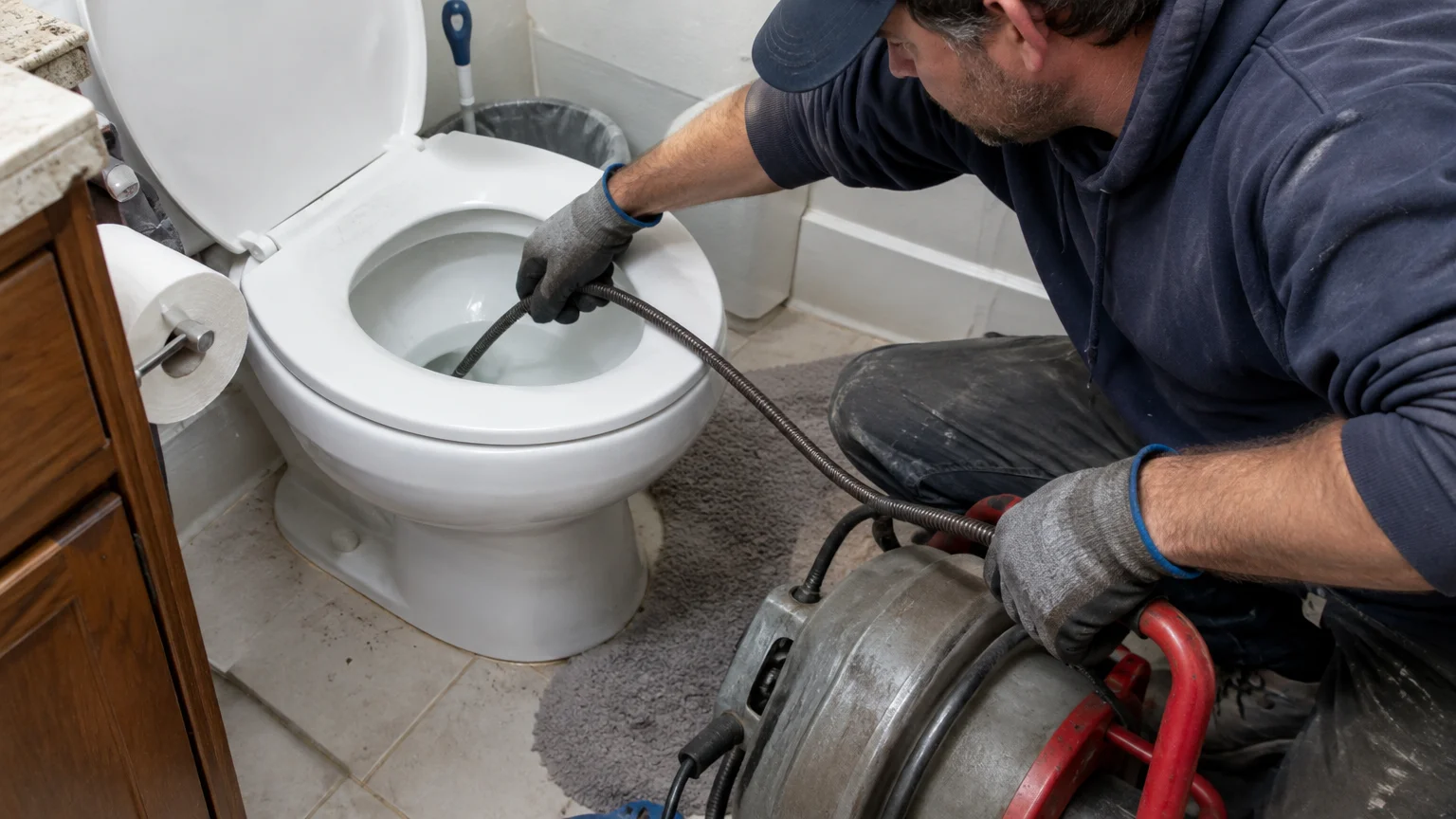
Using the wrong tool can cause damage. A bare metal cable may scratch porcelain, and a large cable may not fit through a small opening. Homeowners should not use a powered drain machine in a toilet unless it is made for that task and they know how to use it safely.
What does a powered drain snake look like?
A powered drain snake usually has a motor, cable, and control system. Some models hold the cable inside a drum. Others have a frame with a motor and a partly exposed cable. Many include a foot switch, so the operator can control the motor while holding the cable.
Drum-style machines and exposed-cable machines
A drum-style machine looks like a compact motor with a round case for the cable. The drum turns as the motor runs and keeps much of the cable inside. This design can limit loose cable near the work area. The operator still needs to control the feed and watch the cable closely.
An exposed-cable machine has a motor and a cable that feeds out in the open. Its frame may have wheels or a stand. These tools can work with larger drains than small hand snakes, but the cable may whip or twist if it catches. The person using it needs proper training and safety gear.
Foot switch, motor, and cable-feed controls
The foot switch starts or stops the motor. A feed control moves the cable forward or back. Some tools have a clutch or another control to manage how the motor turns. These parts help a trained user guide the cable, but they do not remove the risk of injury or pipe damage.
Powered machines are often used for larger lines or stubborn clogs. They may be a poor choice for an unknown pipe, a weak line, or someone without training. The motor’s force can hide how the cable is meeting a clog until it catches or pushes too hard. When unsure, leave the work to a plumber.
What do different plumbing snake tips look like?
Snake tips come in different shapes because clogs need different approaches. A rounded tip may move through a line, while a hook can catch some debris. A cutter head may scrape or cut certain buildup. Check the tool maker’s guide to see which head fits each job.
Bulb, arrow, and cutter heads
A bulb head is rounded, like a small ball or loop. It can help guide a cable through a drain or work against soft material. An arrow-shaped head has a pointed shape that may help it move into a clog. A cutter head has a wider edge or blade-like shape to scrape or cut certain buildup.
These heads do not work the same way in every drain. The wrong tip may get stuck, push debris farther into a pipe, or cause harm. A cutting head can be risky in a pipe with a weak wall or damage. Do not choose a tip by guessing what the clog looks like.
Retrieval and specialized attachments
A retrieval head may look like a hook or small corkscrew. It is made to catch items such as hair and pull them back out. Special heads may suit certain materials or pipe conditions. Some can look alike, so read the tool label before use.
A snake cannot safely retrieve every object. A hard item may be beyond the tool’s reach or may get more stuck if pulled the wrong way. If a toy, cloth, or other solid object has gone down the drain, stop using the fixture. Ask a plumber to check it instead of pushing the item farther into the line.
How can you tell a plumbing snake from other drain tools?
A plumbing snake has a flexible cable that enters a pipe and reaches a clog. Other drain tools work in different ways. A plunger uses pressure, a drain brush scrubs an area within reach, and a camera looks inside a line without clearing it.
Drain snakes compared with plungers and drain brushes
A plunger has a rubber cup on a handle. It uses pressure to move a blockage near the fixture. It does not have a long cable that travels into the pipe. A plunger may help with some simple clogs, but it may not reach a blockage farther down the line.
A drain brush has bristles on a narrow handle. It can clean areas a person can reach, such as buildup near a stopper. It is not made to travel deep into a pipe. Homeowners can often remove and clean a stopper if they can do so safely and follow the fixture instructions.
How snakes differ from cameras and hydro-jetting equipment
A drain camera has a small lens on a cable. It helps a plumber look inside a drain and find a problem. It does not usually clear a clog by itself. The camera may help show whether the issue is buildup, a foreign object, or a damaged pipe.
Hydro-jetting equipment sends water through a hose at high pressure to clean pipes that can handle it. It differs from a snake, which uses a cable and head. High-pressure cleaning is not right for every pipe. A trained professional should check the pipe’s age, material, and condition first.
What size plumbing snake should you use for a drain?
The right snake depends on the fixture, pipe, and likely clog location. A small cable may fit a sink drain, while a toilet needs a toilet auger. Larger or deeper lines may need professional equipment. The longest or thickest tool is not always the best choice.
Matching cable length and thickness to the fixture
A cable must fit through the drain opening and move around its bends. A thin cable may be easier to guide in a small drain, but it may not be strong enough for a tough blockage. A thicker cable may be harder to control and may not fit a tight pipe or fixture.
Cable length matters as well. A short tool may not reach a blockage farther down the line. A longer cable can reach farther, but it may also be harder to handle and store. The tool’s label should say which types of drains it is made for. Do not use a tool beyond the maker’s limits.
Why pipe material and blockage location matter
Pipe material affects how a cable should be used. Old, rusty, cracked, or weak pipes may not handle force well. A clog near a sink opening differs from a blockage in a buried sewer line. A homeowner may not be able to see the pipe’s condition from the fixture.
A clog in one sink may point to a local issue. Several slow drains or toilets that gurgle may signal a wider problem. In that case, repeated use of a small snake may not reach or fix the cause. Drain Cleaning can help clear buildup, while a plumber can check for pipe or sewer line trouble.
How do you use a plumbing snake safely?
Use a plumbing snake only when its instructions match the drain and you can control the tool. Feed the cable gently, turn it as directed, and pull it back slowly. Stop if it catches, the pipe seems damaged, or careful use does not clear the clog.
Basic steps for feeding, turning, and withdrawing the cable
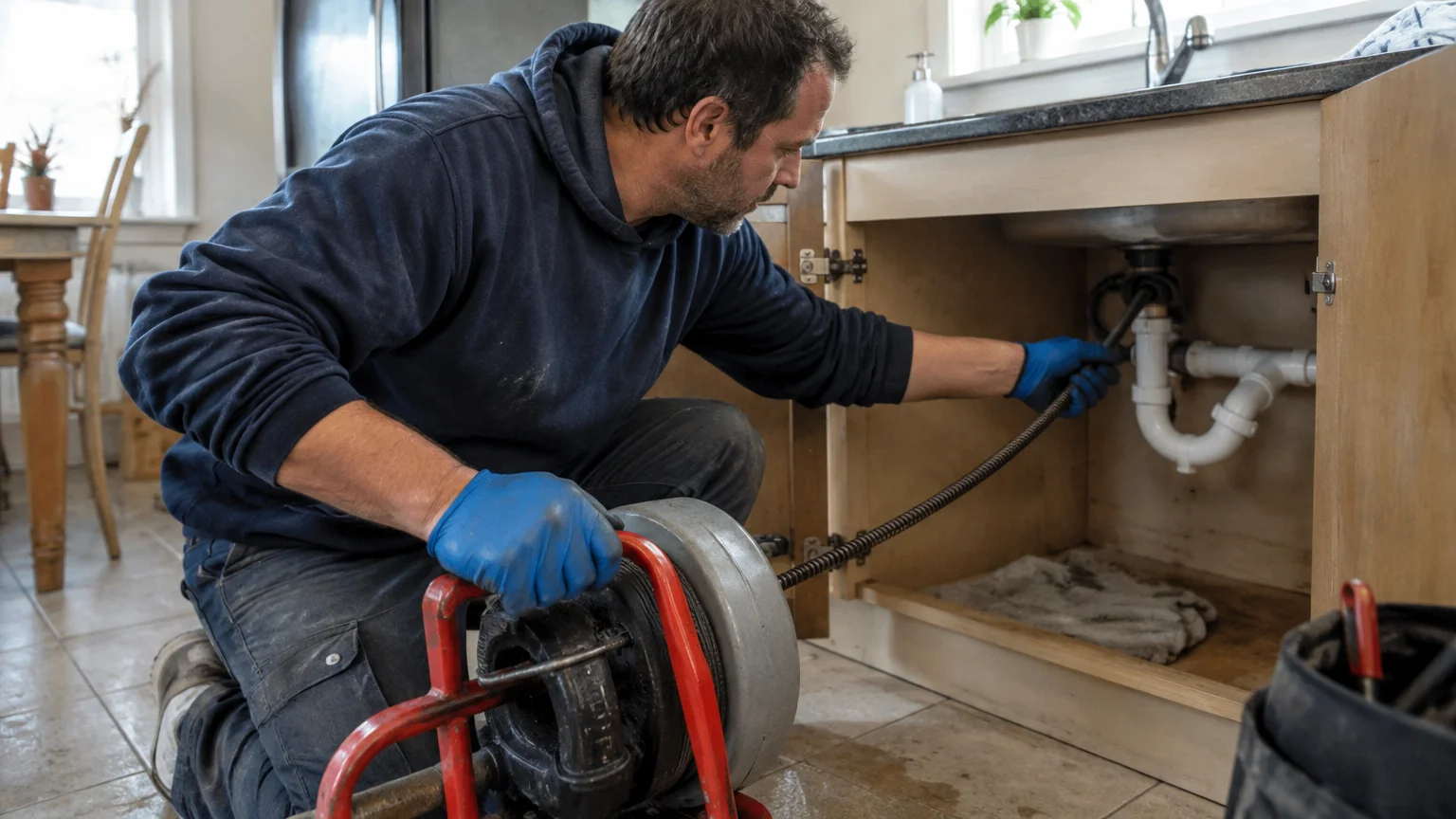
For a small hand snake, read the tool instructions first and clear the work area. Wear gloves and eye protection. Remove a stopper only if you can do so safely. Keep the cable away from loose clothes, hair, and anything that might catch.
- Guide the tool’s tip into the drain without forcing it.
- Feed the cable a little at a time while turning the handle as directed.
- Pause when the resistance changes, and do not push hard.
- Pull the cable out slowly while keeping control of the exposed length.
- Clean the tool and test the fixture gently after removing it.
Steps can vary by model, so follow the maker’s directions. Do not run a powered snake unless you know how to use its controls. Never mix drain chemicals with snaking. Chemical cleaners can splash, burn skin, or react with other products.
Safety precautions and signs to stop
Keep your hands away from moving parts, and do not hold a powered cable while it turns. Switch off or unplug a machine before making changes. Wear gloves and eye protection, and keep children and pets away from the work area. Stop the tool if the cable kinks, binds, or starts to twist.
Stop if water backs up in other fixtures, sewage appears, or the drain stays blocked after a careful try. A strong chemical smell, a damaged pipe, or a tool stuck in the line also calls for help. You do not need a professional for simple checks and cleaning you can safely reach. Risky or unclear drain work should be left to a plumber.
When should you call a plumber instead of using a snake?
Call a plumber when a blockage keeps returning, affects more than one fixture, or comes with sewage or signs of pipe damage. The problem may be deeper than a household tool can reach. A plumber can inspect the line, choose suitable tools, and help avoid making the damage worse.
Recurring or multiple-drain blockages
A clog that returns soon after clearing may have a cause still inside the pipe. Grease, scale, roots, or a pipe fault may need more than a quick pass with a small snake. Forcing a cable again and again can harm a drain or push the blockage farther along.
Several slow fixtures at once may point to a shared drain or sewer line issue. Gurgling sounds, water rising in another fixture, or a bad smell can also point to trouble beyond one sink. Drain Cleaning may help, but the line should be checked if the signs keep coming back.
Sewage backups, suspected pipe damage, and difficult access
Sewage in a tub, floor drain, or toilet is a reason to stop using affected fixtures and seek prompt plumbing help. Avoid touching dirty water, and keep children and pets away. A plumber can look for a sewer blockage and advise on safe cleanup.
Cracks, leaks, soft flooring, or a cable that keeps catching may point to pipe damage. A blockage in a buried line or a hard-to-reach area also calls for proper tools and training. Westlake Village Plumber serves properties across the Westlake Village area, including North Ranch and Three Springs, as well as nearby communities. For a recurring clog, sewage backup, or suspected pipe issue, use the closing contact option to arrange professional help.
Key takeaways
- A plumbing snake has a flexible cable, a working tip, and a handle or motor.
- A toilet auger has a curved guide and a cover to help protect the bowl.
- The right tool depends on the fixture, pipe, and clog location.
- Homeowners can do simple, reachable cleaning, but should not force a cable.
- Recurring clogs, sewage, or signs of pipe damage need a plumber’s review.
Frequently Asked Questions
Can a plumbing snake damage a pipe?
Yes. A snake can harm a pipe if it is too large, used with too much force, or pushed through a weak or damaged line. Follow the tool instructions and stop if the cable binds. A plumber should check old or fragile pipes before strong cleaning.
Is a toilet auger the same as a drain snake?
A toilet auger is one type of plumbing snake, but it has a curved guide to help it pass through a toilet trap. It often has a sleeve to protect the bowl. A general drain snake may not have those parts and could scratch porcelain if used in a toilet.
Can a plumbing snake clear every clog?
No. A snake may clear some clogs, but it may not fix a broken pipe, a deep sewer blockage, or a solid item stuck in the line. If the blockage returns, affects several fixtures, or causes sewage to back up, stop and ask a plumber to inspect it.
Should a homeowner use a powered drain snake?
A homeowner should use a powered snake only if the tool is made for that drain and they know how to control it safely. Its motor can twist or pull the cable with force. For an unknown pipe, a stubborn clog, or a large machine, professional help is safer.
What is the difference between a snake and a drain camera?
A snake uses a cable and tip to reach or work against a clog. A drain camera has a lens that helps show what is inside the pipe. A camera can find a problem, but it does not usually clear it. A plumber may use both tools when needed.
Conclusion
A plumbing snake can be a hand tool, a toilet auger, or a powered machine. Each kind has a cable, a working head, and parts that help guide or turn it. Choosing the right tool means matching it to the fixture and pipe, then using it without force.
Simple cleaning near a drain opening may be safe for a homeowner. Recurring clogs, several slow drains, sewage, or signs of pipe damage need a different response. Westlake Village Plumber can help property owners understand the problem and decide what to do next. Plumbing advice can also help you know when a small drain issue may call for plumbing repair or emergency plumbing support.
If you are unsure what is causing the blockage in Westlake Village, avoid forcing a tool into the drain. Contact us to discuss the problem with Westlake Village Plumber and choose a safe next step.