Hair salon plumbing problems often include slow shampoo sinks, leaking sprayers, weak water flow, and hot water that runs out. Hair and styling products can build up in drains, while busy stations put steady demand on fixtures and heaters. Staff can handle simple checks, but repeat clogs, unsafe equipment, and leaks need a plumber.
A plumbing issue can interrupt appointments and make daily work harder. Knowing what to watch for helps salon owners act early and protect staff, clients, and the building.
Table of Contents
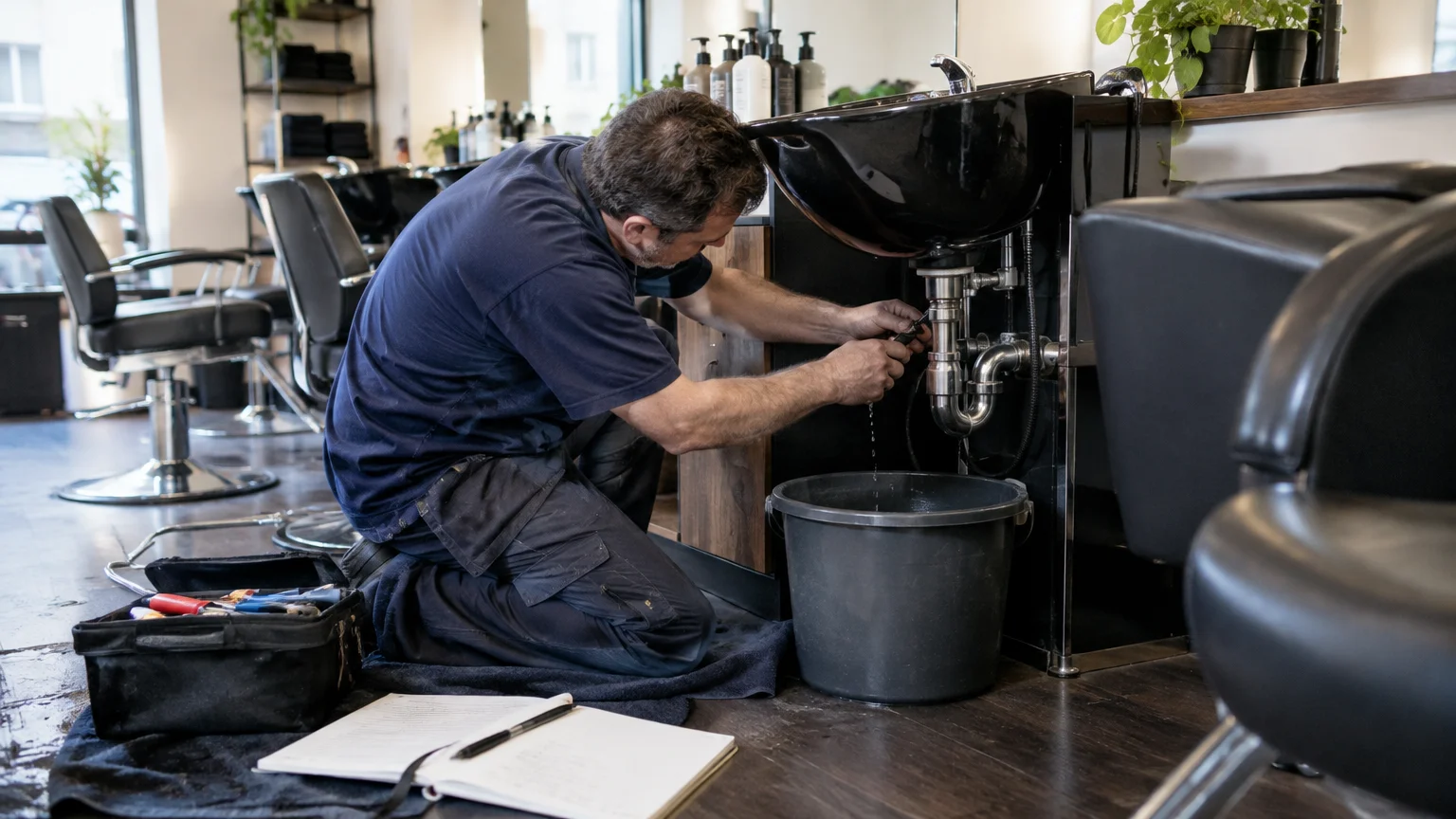
- What plumbing problems are common in hair salons?
- Why do shampoo station sinks drain slowly or clog?
- Why is a shampoo station leaking or losing water pressure?
- Why does a hair salon run out of hot water?
- How can salon owners prevent plumbing problems?
- When should a salon call a commercial plumber?
- How can a salon plan plumbing upgrades?
- Key takeaways
- Frequently Asked Questions
- Conclusion
What plumbing problems are common in hair salons?
Hair salons often deal with slow or blocked shampoo sink drains, dripping fixtures, weak water flow, and hot water trouble. Restroom toilets and faucets can also fail when used often. Finding the cause early can keep stations working and help prevent water damage.
How daily salon use strains plumbing fixtures
A shampoo station may serve many clients in one workday. Hair, conditioner, shampoo, and other products can enter the drain. Over time, this mix may catch inside the pipe and slow water flow. A spray hose or faucet handle can also wear down with regular use.
Hot water systems face steady demand as well. If several stations run close together, the heater may struggle to keep up. A salon may notice cooler water, changing temperatures, or long waits between clients. These signs may point to a repair need, a change in how stations are used, or a heater that does not fit the business.
Restroom plumbing matters just as much. A toilet that keeps running wastes water and may have a worn part inside the tank. A dripping faucet or backed-up drain can also disrupt staff and clients. Staff can look inside the tank for a part that is stuck or out of place. Call for repair when the issue returns or a part needs to be replaced.
Which issues need immediate attention?
A steady leak, water near electrical equipment, a strong gas smell, or a drain backup needs prompt attention. Turn off the fixture or nearby water valve if it is safe. Keep people away from wet areas, and do not touch electrical items that may be wet.
If you suspect a gas leak, leave the building and contact the gas utility or emergency services from a safe place. Never use a flame to look for a leak. Westlake Village Plumber can help salon owners assess plumbing concerns and decide when a repair is needed.
Why do shampoo station sinks drain slowly or clog?
Shampoo station sinks often drain slowly when hair and product residue gather in the trap or drain line. A trap is the curved pipe under a sink that holds water and helps block sewer gas. A clog farther down the line may need a plumber’s tools to clear safely.
How hair, product residue, and debris affect drains
Loose hair can tangle and catch inside a drain. Conditioner, hair masks, and styling products can leave a sticky film. More material may stick to that film over time, leaving less room for water to pass. The sink may gurgle, drain slowly, or hold water.
A small strainer can catch loose hair before it enters the pipe. Staff should empty it into the trash after each use. Do not push hair into the drain, and do not use strong chemical cleaners as a routine fix. Some cleaners can harm pipes, splash back, or give off unsafe fumes, especially when mixed with another product.
What salon staff can safely check before calling a plumber
Staff can remove visible hair from the sink strainer and clean the basin as the product maker advises. They can also check whether a nearby sink drains well. If just one station is slow, the blockage may be close to that fixture. If several sinks or floor drains back up, the problem may affect a shared drain line.
Stop using a sink if water rises, sewage appears, or a clog returns soon after cleaning. Do not take plumbing parts apart unless trained to do so. A plumber can check the trap and pipe, clear a deeper blockage, and look for damage that simple cleaning will not fix. Tell the plumber when the issue began and which fixtures are affected.
Why is a shampoo station leaking or losing water pressure?
A shampoo station may leak or lose water pressure because of a worn hose, blocked spray head, loose connection, or faulty valve. A leak behind a wall or under the floor needs a professional check. Finding the source matters because hidden water can harm the building before it is easy to see.
Common causes in hoses, spray heads, valves, and connections
A split spray hose may leak only while the station is in use. A loose fitting can drip under the basin, while mineral buildup or debris may block a spray head and weaken water flow. A valve that does not open fully may also limit flow to one station.
Staff can look for visible drips and see if the hose is bent or pulled tight. If the spray head comes off, follow the maker’s cleaning steps. Do not force a stuck part or tighten a connection that staff cannot reach safely. Stop using the station if water sprays toward electrical equipment or runs into a wall or cabinet.
Low water pressure in a building can have several causes, and the same basic checks may help a salon. See whether low flow affects one fixture or the whole building. If other sinks work normally, the problem may be at the station. If several fixtures have weak flow, a shutoff valve, supply pipe, or wider plumbing issue may be involved.
When a leak may indicate a hidden pipe problem
Water stains, a musty smell, bubbling paint, or damp flooring can point to a hidden leak. A leak that returns after a visible fitting is tightened may also have another source. Staff should note where the signs appear and whether they change, then limit water use nearby.
Do not open a wall or floor to search for a pipe. A plumber can use leak tools and check connections that can be reached. If water is spreading, use a safe shutoff valve and arrange prompt help. Westlake Village Plumber can advise salon owners when a visible drip needs a closer plumbing check.
Why does a hair salon run out of hot water?
A salon may run out of hot water when client demand is higher than the heater can handle or when the unit has a fault. A worn part, buildup inside a tank, or a system that is too small can cause changing temperatures. A plumber can find the cause and explain whether repair or replacement fits.
How salon demand affects commercial water heater performance
A salon’s hot water use can change throughout the day. Several shampoo stations may draw hot water at once, leaving less for the next client. The building’s pipe layout and the heater’s condition also affect how quickly hot water reaches each station.
Staff can note when the problem happens, which stations are affected, and whether water turns cold quickly or warms slowly. Check that no one has changed the heater controls without permission. Do not remove covers or change gas, electrical, or temperature settings without proper training.
Tank heaters store heated water in a tank. Tankless heaters warm water as it flows through the unit. Each type has limits, and a tankless unit still needs enough capacity for salon demand. A plumber can review the heater, fuel or power supply, venting, and expected use before suggesting a fix.
Signs the unit needs repair or replacement
A unit may need repair if hot water stops, the temperature changes without warning, or a control or part fails. A tank heater that leaks from the bottom may have a serious tank problem, but water may also come from a nearby pipe or valve. Keep away from pooled water and ask a plumber to find the source.
Repeated problems, visible rust, unusual sounds, or water around the unit need attention. A plumber can explain whether repair makes sense or replacement is the better long-term choice. Water Heater Repair can address faults, while Water Heater Installation may be needed for a new system. The right choice depends on the unit’s condition and the salon’s needs.
How can salon owners prevent plumbing problems?
Salon owners can prevent many plumbing problems with simple daily habits and planned checks. Keep hair out of drains, clean station parts as the maker directs, and watch for small leaks. These steps do not replace professional service, but they can help staff spot trouble before a station must close.
Daily habits for protecting sinks and drains
Set a clear routine for staff who use shampoo stations. A small drain strainer and regular cleaning can reduce the amount of hair entering the pipe. Staff should put hair and solid debris in the trash, not the sink. Avoid pouring products, oils, or cleaning chemicals into a drain unless the label says they are safe for that use.
A useful daily checklist includes:
- Clear loose hair from each strainer and put it in the trash.
- Wipe the basin and check the spray hose for drips or cracks.
- Run water briefly and note slow flow or unusual gurgling.
- Tell a manager about stains, damp cabinets, or water on the floor.
These checks are safe for staff because they do not involve opening pipes or handling the heater. A staff member should stop using a fixture if a leak grows or a drain backs up. Record which station is affected and when the change began. Clear notes can help a plumber find the problem sooner.
Maintenance checks for water heaters and restroom fixtures
A manager can look at areas near the heater for dampness, rust, or unusual changes. Keep the space around the unit clear, but do not open its cover or adjust fuel or power parts. Follow the maker’s care steps and arrange professional checks when the system shows signs of trouble.
Check restroom toilets, faucets, and floor drains as part of regular building care. A toilet that keeps running may have a faulty flapper, float, or fill valve. Staff can report the sound and location, but repeat or hard-to-reach problems need repair. Good records help track repeat issues and support a maintenance plan with a local plumber.
When should a salon call a commercial plumber?
A salon should call a commercial plumber when a leak, backup, weak flow, or hot water failure affects safety or normal work. Repeat clogs and problems across several fixtures also need a professional check. Early help can limit damage and help the business decide whether to keep using a station.
Problems that can disrupt appointments or close a station
A blocked shampoo sink can stop services at that station. A leak under the basin may make the area unsafe, while no hot water can affect several appointments. A backed-up restroom or floor drain may mean the area must close until the problem is checked and cleaned safely.
Call promptly for spreading water, a burst pipe, sewage coming up through a drain, or a leaking heater. If water is near electrical equipment, keep people away and do not touch it. For a gas smell, leave the building and contact the gas utility or emergency services from a safe place.
Emergency Plumbing can help with urgent plumbing failures. A plumber can inspect the fixture, find the cause, and explain safe next steps. If the heater is the problem, Water Heater Repair may address the unit. The right service depends on what has failed, so a clear description of the signs helps.
What information to share when arranging service
A salon manager can help the plumber prepare by describing the problem in plain words. Share which fixture is affected, when the issue began, and whether it is getting worse. Note if other sinks, toilets, or stations are affected, and whether the building has had the same problem before.
Mention signs such as a wet wall, water near the heater, a drain smell, or a change in water temperature. Share the heater’s make and model if you can find it without opening a panel. Keep staff and clients away from unsafe areas, and tell the plumber if a shutoff has already been used.
How can a salon plan plumbing upgrades?
A salon can plan plumbing upgrades by matching fixtures and hot water capacity to its layout, staff, and client demand. A plumber can review how many stations run at once and where hot water is needed. Planning ahead can help the business choose equipment and schedule work with less disruption.
Choosing fixtures and water heating capacity for business needs
Start by listing the number of shampoo stations, restrooms, and other fixtures. Note busy times and whether several stations need hot water together. A plumber can use this information to assess the current unit, pipe sizes, venting, and a suitable place for new equipment.
A tank system may suit a salon with steady demand and room for storage. A tankless system may be worth considering when space is limited, but it must be sized for the water flow needed at busy times. Neither type suits every building. Installation rules and venting needs can also affect the choice.
Choose fixtures made for frequent use and easy cleaning. Ask which parts can be replaced and how each fixture connects to existing pipes. Water Heater Installation can help with choosing and fitting a new system. Anode Rod Replacement Water Heater may also help some tank units, depending on maker guidance and the unit’s condition.
Coordinating work to limit disruption
Plan work around the salon’s schedule and tell staff which stations may be out of use. Ask the plumber which areas must be clear and whether water needs to be shut off. A simple plan can help staff move bookings or use other stations during repairs or upgrades.
Before work starts, confirm which fixtures or systems are included and who will prepare the work area. After the job, ask the plumber to explain the new equipment and any care steps. Keep the user guide and service notes where the manager can find them. A clear plan helps the salon return to normal work with fewer surprises.
Key takeaways
- Hair, product residue, leaks, and heavy use can strain salon plumbing.
- Staff can clean strainers and report signs, but should not open pipes or heater covers.
- Call a plumber for repeat clogs, spreading leaks, weak flow across fixtures, or hot water failure.
- Match water heating equipment to the salon’s layout and busiest times.
Frequently Asked Questions
What should salon staff do when a shampoo sink will not drain?
Staff should stop using the sink, remove visible hair from the strainer, and check whether nearby fixtures drain normally. Do not pour harsh cleaners into the pipe or push debris farther down. If water stands, backs up, or the clog returns, arrange a plumber’s check.
What causes low water pressure at a salon shampoo station?
A blocked spray head, bent hose, partly closed valve, or worn connection may reduce flow at one station. If several fixtures have weak flow, the cause may be farther along the building’s supply system. Note which fixtures are affected and ask a plumber to check repeat problems.
What should a salon do if a water heater is leaking from the bottom?
Keep people away from pooled water and do not touch wet electrical parts or open the heater. If it is safe, use the right water shutoff. Water may come from the tank or a nearby connection, so a plumber should find the source and advise whether repair or replacement is needed.
How can staff check for a gas leak near a water heater?
Staff should not test a suspected gas leak themselves. If anyone smells gas, leave the building and contact the gas utility or emergency services from a safe place. Do not use a flame, operate switches, or return until responders say it is safe.
When does a salon need water heater replacement instead of repair?
Replacement may be the better choice when the unit has repeat failures, a leaking tank, or cannot meet the salon’s hot water needs. A plumber should inspect the system and compare its condition with business demand. Repair may still work when the fault is limited and the unit remains suitable.
Conclusion
Hair salon plumbing problems can affect client service, staff safety, and daily work. Regular drain care and quick reporting can help, but leaks, repeat clogs, and hot water failures need a professional check. Plumbing costs depend on the cause, parts, access, and damage; the final cost is confirmed on a quote. Contact us to discuss the next step with Westlake Village Plumber.
Westlake Village salons can use simple daily checks to catch problems early. Salon owners in Westlake Village can use plumbing advice to understand common problems and decide what needs attention.
If you are not sure what you are dealing with, it is worth having someone look at it before it turns into a bigger job. Get in touch with Westlake Village Plumber today and we will tell you where you stand.