A toilet keeps running when water escapes from the tank or the fill valve does not shut off. Common causes include a worn flapper, high water level, tangled chain, or faulty handle. You can check these parts safely, but Westlake Village Plumber can help when basic steps do not stop the flow.
A running toilet may seem small, but it can waste water, make noise, and signal a damaged part. Many cases are easy to understand after a careful tank check. That check can show whether you need simple upkeep or professional toilet repair.
Table of Contents
- Why does my toilet keep running?
- Is the flapper causing the toilet to keep running?
- Could the toilet fill valve be the problem?
- How do you check the toilet's water level?
- Can a running toilet cause water damage or higher bills?
- Can a flush handle, chain, or lift arm cause a running toilet?
- Why does a toilet run intermittently?
- How can you fix a toilet that keeps running?
- What should you do if the toilet still runs after repairs?
- When should you call a professional plumber for a running toilet?
- Key takeaways
- Frequently Asked Questions
- Conclusion
Why does my toilet keep running?
A toilet keeps running because water still moves from the tank into the bowl, or because the fill valve keeps adding water. The flapper, fill valve, float, chain, and handle work as one system. A small fault in one part can keep the whole toilet running.
How a toilet should stop running after flushing
When you press the handle, the chain lifts the flapper. The flapper is the rubber seal at the bottom of the tank. It lets water enter the bowl. After the tank empties, the flapper should drop back onto its seat.
The fill valve then adds clean water to the tank. The float rises with the water. When the water reaches the right level, the fill valve should shut off. The tank should become quiet, and the bowl should stop receiving water.
The most common reasons a toilet continues to run
A worn flapper is a common cause. Mineral buildup can also stop it from making a firm seal. Other causes include a float set too high, a chain that is too short, or a handle that does not return to its normal place.
Remove the tank lid and watch one full flush. This can show whether water flows over the overflow tube or leaks below the flapper. In Westlake Village, older homes may have more than one worn toilet part after years of use.
Is the flapper causing the toilet to keep running?
The flapper may be the cause when water slowly enters the bowl after flushing. It should sit flat and make a tight seal. If it is cracked, stiff, bent, or covered with buildup, water can pass around it.
How to inspect the flapper for damage or poor sealing
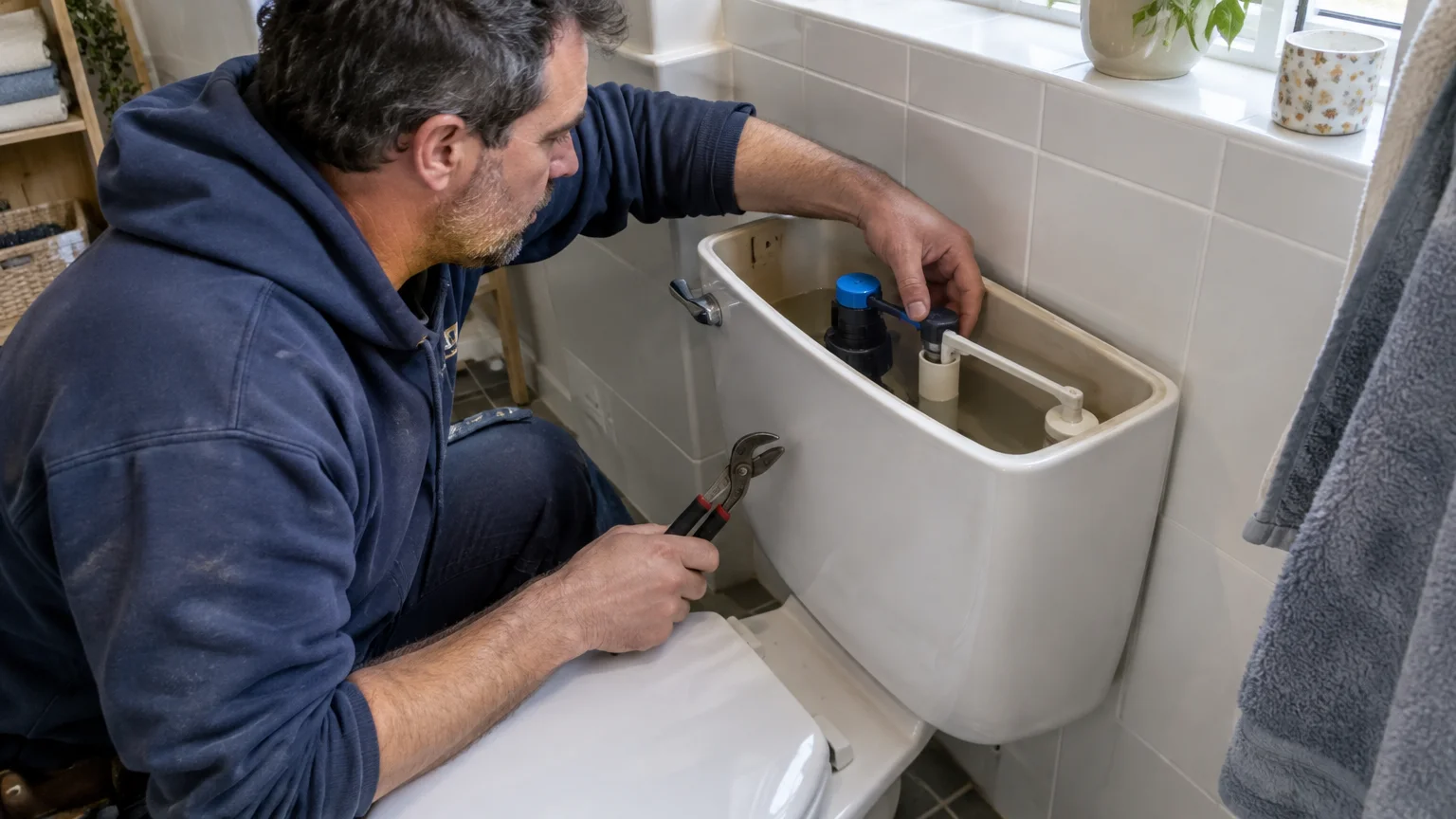
First, turn off the toilet shutoff valve. It is usually near the wall or floor behind the toilet. Flush once to lower the tank water. You can then inspect the flapper without water spraying from the supply line.
Look for tears, hard rubber, missing tabs, or a loose connection. Check the hinge points and the seat below the flapper. The seat is the smooth area where the rubber seal rests. Dirt or mineral deposits there can leave a small gap.
A dye test can help confirm a slow leak. Add a small amount of food coloring to the tank, but do not flush. If colored water appears in the bowl, tank water is passing through the flapper or its seat. Rinse the bowl after the test if needed.
When cleaning or replacing the flapper can solve the problem
Cleaning may help when the flapper is still soft and only has light buildup. Wipe the sealing area gently. Do not use sharp tools because they can scratch the seat. If the rubber feels hard or breaks when touched, replacement is usually the better choice.
The new flapper must match the toilet design. Some toilets use a standard rubber flapper. Others use a special seal or canister part. A part that looks close may still fit badly. Westlake Village Plumber can help identify the right repair when a replacement will not seal.
Could the toilet fill valve be the problem?
The fill valve may be faulty when the toilet hisses, refills without a flush, or sends water into the overflow tube. This valve controls water entering the tank. It should stop when the float reaches the set level.
Signs of a faulty or noisy fill valve
A noisy valve may have a worn seal or blocked screen. Some valves vibrate or make a sharp squeal while water enters. A valve that runs for a long time after each flush may also need repair.
Watch the tank while it fills. If water rises above the marked line and flows into the overflow tube, the float may be too high. If water stays at the right level but the valve keeps running, the valve may not be closing.
A supply line issue can affect filling too. A partly closed shutoff valve may cause weak flow or strange sounds. A bent supply line can do the same. Take care when working on an old valve because forcing it can cause a leak.
How fill valve adjustment differs from replacement
Adjustment changes the height where the float tells the valve to stop. Many models have a screw, clip, or sliding part. Make small changes and test the tank after each one.
Replacement means removing the old valve and installing another one. Shut off the water and drain the tank first. Tighten the connection below the tank with care. Too much force can damage the porcelain or supply connection.
A homeowner may adjust an easy-to-reach float or replace a familiar part by following clear instructions. A professional plumber is safer when the valve is corroded, the shutoff does not work, or the tank connection starts to leak.
How do you check the toilet's water level?
The water level should sit below the top of the overflow tube and near the marked fill line. The exact mark varies by toilet. A level that is too high may send water into the bowl without a normal flush.
Where the water level should sit in the tank
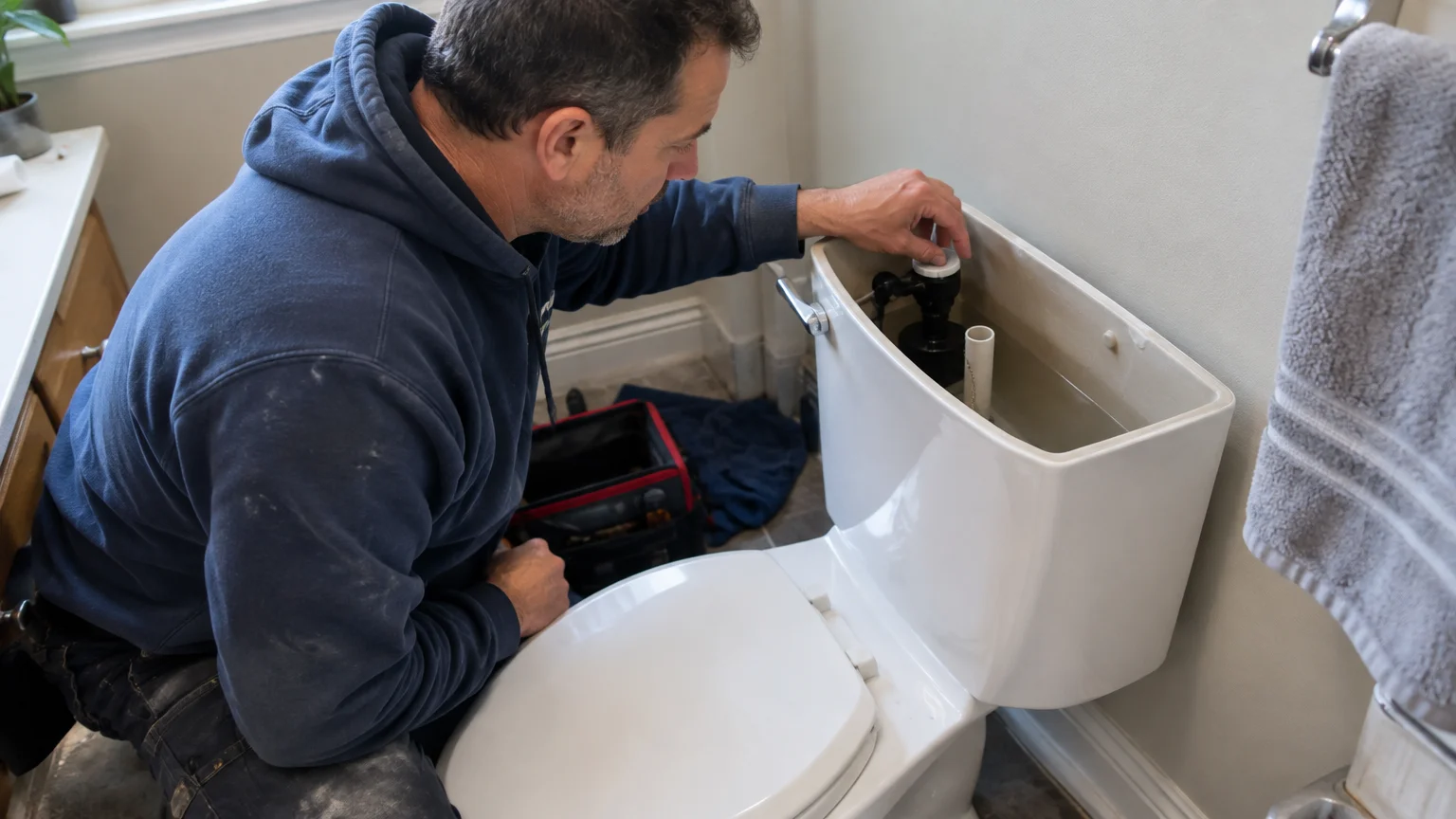
Remove the tank lid and find the line printed inside the tank. If there is no line, keep the water below the top of the overflow tube. This open pipe prevents the tank from filling too far.
The tank should fill without water spilling into the tube. When the valve shuts off, the surface should stay still. Movement in the bowl can point to a leak, even when the tank level looks normal.
Keep the tank lid in a safe place during the check. A loose lid usually does not cause a running toilet, but it can hide the sound. Removing it makes the moving parts easier to see.
Why an incorrect float setting causes continuous running
A float set too high lets the tank fill beyond its proper level. Water then enters the overflow tube and flows into the bowl. The fill valve keeps working because it never receives the signal to stop.
A float set too low may cause a weak flush. The toilet may need a second flush, which adds wear and can hide the main problem. The setting should allow a full flush without sending water into the overflow tube.
Make only small adjustments. Test the toilet after each change. If the level changes by itself, the float or fill valve may have an internal fault. A professional can also check a damaged overflow tube or tank fitting.
Can a flush handle, chain, or lift arm cause a running toilet?
Yes. A stuck handle, tight chain, or bent lift arm can hold the flapper open. The toilet may run after a flush, or stop only when someone moves the handle. These parts are simple, but they must move freely.
How to identify a stuck handle or tangled chain
Press and release the handle several times. It should move smoothly and return to its starting place. If it feels loose, stiff, or slow, inspect the tank. The handle arm should not press against the tank wall.
The chain should have a little slack when the flapper is closed. A chain that is too short can hold the flapper open. A chain that is too long may slip under it or fail to lift it enough. Remove tangles and check the hook.
The lift arm should move without striking the lid or other parts. Rust can weaken the arm. A cracked handle may pull unevenly. Replacing a damaged handle is often suitable for diy toilet repair when the shutoff works and the tank parts are easy to reach.
What to check when the flapper does not close fully
Watch the flapper during one flush. It should rise, let water pass, and settle on the seat. If it catches on the chain, handle arm, or another part, remove that obstruction before replacing anything.
A flapper may close poorly because it is the wrong size. Some tanks need a certain replacement part. A mismatch can leave a gap around the seat. The chain must also connect to the correct lifting point.
Do not push hard on porcelain. Tanks and bowls can crack from force or uneven pressure. If a handle or arm is rusted in place, professional help can prevent a small repair from becoming a larger leak.
Why does a toilet run intermittently?
A toilet runs intermittently when water slowly leaves the tank and the fill valve turns on to replace it. The refill may happen every few minutes or only a few times each day. This often means the flapper has a small leak.
How a slow tank leak creates periodic refilling
The tank level drops when water slips into the bowl. As the level falls, the float lowers. The fill valve opens for a short time. After the tank refills, the valve shuts off again. This cycle can repeat without anyone using the toilet.
A flapper leak is common, but a cracked overflow tube or loose tank fitting can also let water escape. A fill valve with a damaged seal may cause the same sound. The tank may stay quiet for long periods, so listening alone may not find the cause.
A running toilet in a guest bathroom can be easy to miss. Property owners should check unused bathrooms during routine care. Tenants should report repeated refilling early, before water reaches the floor or causes a wider plumbing problem.
Simple tests for locating a hidden toilet tank leak
A dye test can show whether tank water enters the bowl. Add food coloring to the tank and wait without flushing. Colored water in the bowl confirms that water is crossing the flapper or another internal path.
You can also mark the tank water level with a pencil. Turn off the shutoff valve and wait. If the level falls, water is leaving the tank. Do not use a permanent marker on porcelain. Erase the pencil mark after testing.
Check the floor around the toilet too. Moisture at the base may point to a seal problem, not just a tank leak. A wet supply connection can also cause trouble. A leak that reaches flooring, walls, or ceilings needs prompt attention.
How can you fix a toilet that keeps running?
A homeowner can often fix a running toilet by cleaning the flapper, adjusting the float, clearing a chain, or replacing a worn part. Start by shutting off the water and looking inside the tank. Safety matters more than speed.
A safe step-by-step troubleshooting process
- Turn the toilet shutoff valve clockwise until water stops.
- Flush the toilet and remove the tank lid with care.
- Watch the flapper, chain, float, and fill valve during a test.
- Check whether water enters the overflow tube.
- Inspect the flapper for damage, buildup, and a poor seal.
- Adjust the float in small steps if the water level is wrong.
- Test the toilet and check the floor and supply connection.
The shutoff valve should stop the water before work begins. If it will not turn, do not force it. An old valve can break or leak around its stem. A plumber can isolate the water and replace the valve safely.
Tools and replacement parts commonly needed
Basic work may need a cloth, small bucket, sponge, adjustable pliers, and a replacement flapper. Some jobs need a compatible fill valve, handle, chain, or rubber seal. The toilet model and tank design should guide your choice.
Avoid harsh chemicals inside the tank. They can harm rubber parts and create new leaks. Drain cleaners should not be used for a running toilet because the fault is usually in the tank, not the bowl drain.
When a repair does not hold after testing, the part may be wrong or another part may be worn. Repeated removal can damage connections. At that point, running toilet repair from a professional is safer. Toilet repair cost also depends on the part, access, damage, and urgency, with the final cost confirmed on a quote.
What should you do if the toilet still runs after repairs?
If the toilet still runs after a flapper or float adjustment, stop replacing parts at random. Several worn parts may be working together. The tank seat, overflow tube, fill valve, shutoff valve, or supply line may need a closer check.
When multiple worn components point to a larger issue
A toilet used for many years may have a hard flapper, weak handle, noisy valve, and rusty bolts at the same time. Replacing one part may reveal another problem. A full check helps show which parts need attention.
Water around the tank bolts or base is a warning sign. Cracks in the tank or bowl are more serious. Porcelain can fail without much warning, especially after force has been used. A damaged fixture may need professional advice before use.
A slow leak may come from the connection between the tank and bowl. Tightening bolts too much can crack porcelain. Handle these parts with care rather than treating them like metal pipe fittings.
Why shutoff valve or supply problems need professional attention
The shutoff valve controls water to the toilet. If it will not close, leaks around the handle, or stays partly open, the supply connection may need work. Water can escape quickly when an old valve fails during repair.
Do not twist or sharply bend the flexible supply line. Do not reuse it when damaged. A loose nut can leak at the wall or tank. Dry a wet connection and check it again after water is restored.
Professional help is wise when the bathroom has damaged flooring, a ceiling stain below it, or a toilet that rocks at the base. Westlake Village Plumber can assess homes and small businesses, including North Ranch, Three Springs, Thousand Oaks, Agoura Hills, Oak Park, Lake Sherwood, and nearby areas.
Can a running toilet cause water damage or higher bills?
Yes. A running toilet sends water through the fixture longer than needed. This can increase water use, create noise, and wear the toilet parts. A leak at the base or supply line can also harm flooring and nearby materials.
How ongoing water flow affects the bathroom and plumbing system
Water moving through the bowl can stain surfaces and leave mineral marks. A constant refill can make the bathroom sound active even when no one is using it. In a busy home or business, the problem may continue for hours before anyone notices.
Moisture outside the toilet is a separate concern. Water around the base can reach flooring under the fixture. It may also spread into a wall or ceiling below. Drying the area does not repair the source, so the leak needs a check.
A running toilet does not usually mean the main drain is blocked. However, a weak flush, toilet not flushing, bowl backup, and running tank may happen together. If water rises or drains slowly, drain cleaning may be needed along with tank repair.
Warning signs that the problem has become urgent
Seek prompt plumbing service when any of these signs appear:
- Water leaks from the tank, supply line, or shutoff valve.
- The toilet rocks, cracks, or shifts at the floor.
- The bowl rises toward the rim during a flush.
- A ceiling or wall below the bathroom has a new stain.
- The shutoff valve will not stop the water.
- The toilet keeps running after several careful repairs.
Until help arrives, close the toilet shutoff valve if it works. If it fails, you may need to turn off the main water supply. A plumber can then find the source and help protect the area from more damage.
When should you call a professional plumber for a running toilet?
Call a professional when basic checks do not solve the issue, water cannot be shut off, or the toilet leaks beyond the tank. Prompt service also helps when the toilet affects a business, rental, or occupied property.
Situations that require prompt plumbing service
Call a professional when water reaches the floor, wall, ceiling, or electrical area. The same applies to a cracked toilet, broken supply line, failed shutoff valve, or bowl that may overflow. These problems can harm more than the fixture.
A plumber is also useful when a replacement part does not fit. Toilet tanks vary by age, brand, and design. The wrong flapper or fill valve may seem to work but still leak. Correct diagnosis can prevent repeated repairs.
Property owners should keep notes about repeated problems. Record noise, refill timing, water near the base, and past repairs. Tenants should tell the property manager and avoid changes that may affect repair responsibility.
What a plumber checks when basic troubleshooting does not work
A plumber checks the tank parts, flapper seat, water level, overflow tube, handle, chain, supply line, and shutoff valve. The inspection may also include the bowl seal and floor around the fixture. The goal is to find the source, not just silence the sound.
The plumber may test the toilet through several flushes. This can reveal intermittent leaks that do not happen every time. If other fixtures have problems, the plumber may also check water pressure, drain flow, or nearby pipe connections.
Westlake Village Plumber helps property owners with running toilets, leaks, blocked drains, and other plumbing concerns. Westlake Village Plumber can explain whether a simple part or a larger repair is needed. The final cost is confirmed on a quote before approved work begins.
Key takeaways
- A worn flapper is a common reason a toilet keeps running.
- A high float can send water into the overflow tube.
- A loose chain or stuck handle can hold the flapper open.
- Homeowners can inspect simple tank parts when the shutoff works.
- A plumber should handle failed valves, leaks, cracks, and repeated problems.
Frequently Asked Questions
Is it safe to use a toilet that keeps running?
It is usually safe for brief use if the bowl flushes normally and no water leaks outside. Close the shutoff valve when the toilet is not needed. Do not use a toilet that may overflow, leaks at the base, or has a cracked tank until it is checked.
Why does the toilet run for a few seconds after flushing?
A short refill after flushing is normal. The tank must replace water used during the flush. The problem starts when the sound lasts too long, begins without a flush, or never stops. These signs may point to a flapper leak, wrong float setting, or faulty fill valve.
Can cleaning the flapper stop a running toilet?
Cleaning can help when dirt or mineral buildup blocks the seal. Turn off the water, drain the tank, and wipe the seat gently. Cleaning will not restore rubber that is cracked, hard, bent, or badly worn. That flapper should be replaced with a compatible part.
How long can a running toilet be left alone?
Do not ignore a running toilet. The longer it runs, the more water it may use, and a separate leak can harm flooring or nearby materials. Close the shutoff valve if it works. A leaking valve or supply line needs prompt professional attention.
Can a plumber fix a toilet that keeps running?
Yes. A plumber can inspect the tank, replace worn parts, correct the water level, and check the shutoff valve or supply line. If the cause is a cracked fixture, loose base, hidden leak, or connected drain problem, the plumber can explain the next step.
Conclusion
A running toilet often starts with a small tank problem, such as a worn flapper, loose chain, or wrong float setting. Careful inspection can solve simple cases. When water leaks outside the toilet, the shutoff fails, or repairs do not work, professional help can protect the property and find the real cause.
Contact us to arrange plumbing help for a running toilet or another repair in Westlake Village.